What actually happens when your rabbit or guinea pig is cremated
Your pet is identified, cremated in a chamber (alone, for a private service), cooled, and the remaining bone is processed into fine ash. A median pet rabbit returns about 74 g[1], usually within one to two weeks.
By the Small Mammal Cremation Services editorial team · Updated September 24, 2026 · 5 min read · Sources
- Each step, from handover to the ashes coming home
- How much ash to expect from a small body
- What you can send with your pet, and what gets removed
The short version
What happens during a small pet's cremation?
Your rabbit, guinea pig or ferret is collected or dropped off, given an ID tag, and placed in a cremation chamber heated to well over 1,000°F. For a private service they're cremated alone. After cooling, what remains is mostly bone, which is gently processed into the soft, pale ash people picture, then sealed in a bag inside a tin, box or urn and returned to you.
Knowing the steps helps many people feel calmer, especially if the goodbye was sudden. Nothing below is graphic, and you can stop reading at any point. If you'd simply like someone to line up a provider, send us your pet's details and we'll handle the searching.
Step 1
How does your pet get to the crematorium?
Small pets are easy to carry, so a lot of families drive them over in a lined shoebox or carrier. Others leave them with the vet, who passes them to the crematorium they work with, or book a home collection. The way the body is carried matters to people: in one US survey, 64% of owners said a trash bag was unacceptable[2], while most were comfortable with a blanket or shroud.
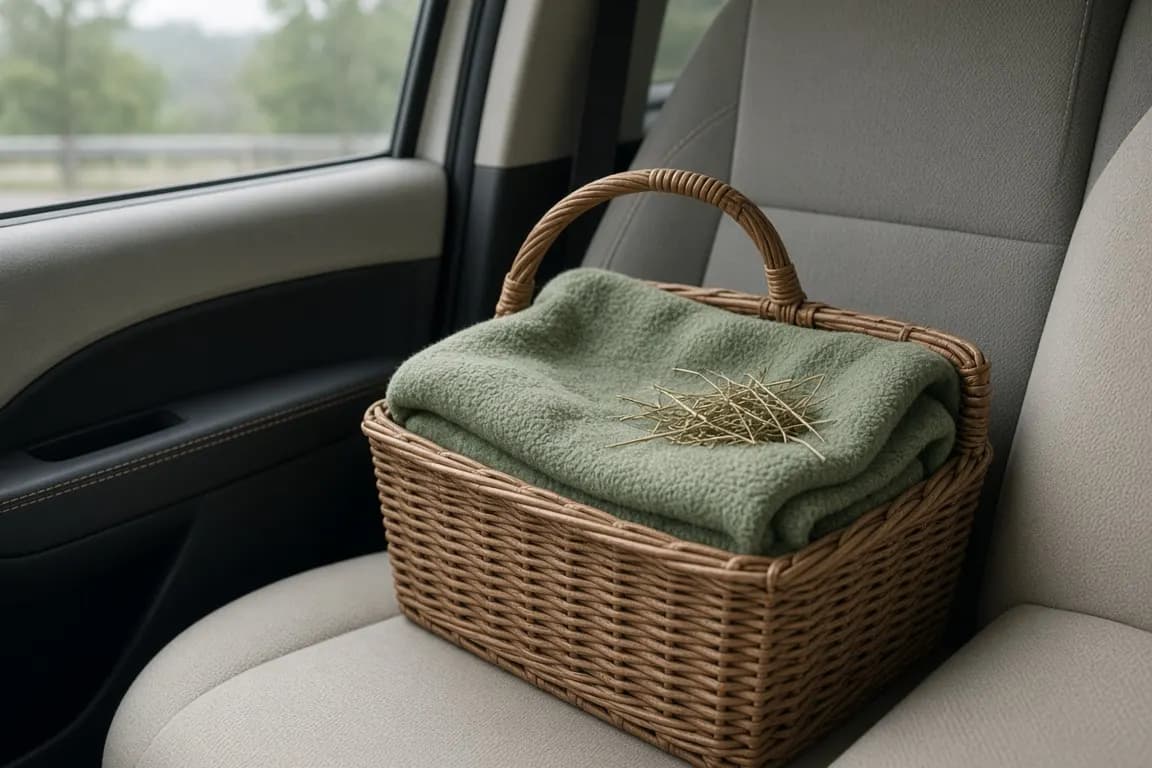
It's fine to ask the driver or the vet how your pet will travel. Wrapping them in their own fleece before handover is a simple thing you can do yourself. If your pet died suddenly and they're a rabbit, speak to a vet before moving them far: USDA guidance on rabbit hemorrhagic disease is to consult before disposal[3], because the virus is hardy and can spread on contaminated bedding.
Step 2
How do they keep track of such a small animal?
Reputable providers log each pet on arrival and attach a numbered metal or ceramic tag that survives the heat. The tag goes into the chamber with your pet and comes out with the remains, so it can follow the ashes through processing. Some place it in the returned bag; ask if you'd like to keep it.
For pocket-sized pets, ask a second question: how is the body kept together? Many crematoria use a small steel tray or a separate small-animal chamber so a guinea pig isn't cremated on a hearth sized for a large dog. Our comparison of private and communal cremation explains why that matters most for partitioned services.
Step 3
How long does cremation take for a rabbit or guinea pig?
The cremation itself is short for a small mammal, often under an hour, because there's very little soft tissue. Cooling takes longer, and the chamber has to be clear and cool enough to recover every fragment before the next pet. The US has about 1,000[4] pet crematories handling almost 1.5 million[5] cremations a year, so your pet will usually be scheduled within a day or two of arriving.
If you want to be there, some providers offer a witnessed or attended cremation. You might see your pet placed in the chamber, sit in a family room, and leave with the ashes the same day. It costs more and needs booking, so mention it first. Our services page explains each type, and the cremation cost calculator can price a witnessed cremation for your pet's weight.
Had you heard of water cremation (aquamation) before today?
Tap an answer to vote and see how others answered. Anonymous.
A small number of providers offer aquamation (water cremation) instead of flame. As the Veterinary Sustainability Alliance's aquamation explainer describes, it uses warm water and alkali over many hours and returns a whiter, finer powder, often slightly more of it. One Delaware provider's published private aquamation prices run $150–$450[6] by weight, with small pets at the bottom of the scale.
Step 4
How much ash is left from a small pet?
Cremated remains typically weigh about 3-5% of body weight[7], a pet-industry rule of thumb close to the roughly 3.5% found in a long-used study of cremated remains. For small mammals that means very little, which surprises many owners who expect a jar.
| Pet | Typical adult weight | Approximate ashes |
|---|---|---|
| Guinea pig | about 1 kg (2.3 lb) | around 37 g, about 2 tablespoons |
| Pet rabbit (medium breed) | about 2.1 kg (4.6 lb) | around 74 g, about 4 tablespoons |
| Ferret (male) | about 2 kg (4 lb) | around 70 g |
| Chinchilla | about 0.5 kg (1.1 lb) | around 18 g, a heaping tablespoon |
| African pygmy hedgehog | 300 to 600 g | around 10 to 20 g |
Before processing, the remains are fragile bone pieces. They're passed through a processor that turns them into an even, sand-like texture, and any metal (a microchip, a surgical clip) is removed. The ashes weight estimator gives a figure for your pet's exact weight, and the urn sizing guide shows which containers suit such a small amount.

Free tool
Ashes weight estimator
See roughly how much ash to expect back, by species and body weight.
Personal touches
Can a toy, hay or blanket go with them?
Usually, yes, within limits. Natural materials burn cleanly and are widely accepted. Plastics, metal, rubber and anything with a battery are normally removed first, because they damage the chamber or contaminate the ashes.
- Usually fine: a small handful of hay, a cotton or fleece square, a willow or seagrass chew, a paper note or drawing, a few dried flowers or dandelion leaves.
- Usually removed: plastic hidey houses, metal bells, rubber toys, harnesses with buckles, ceramic bowls.
- Want it back? Say so clearly. Anything you'd like returned, such as a ferret's harness or a collar, should be removed before handover.
Anything cremated with your pet adds a little to the ash, so keep items small if the ashes are going into jewelry. And take any fur clipping or foot print now, while you still can; the keepsakes guide has tips for small furry feet.
Step 5
When and how do the ashes come home?
Many families get private cremation ashes back within about 5-10 days[8]. Across the markets we track, published return times run from same-day (paid express) to around four weeks, and by our estimate 3 to 14 days is a fair expectation[9]. Rushing it usually costs extra.

The ashes arrive sealed in a bag inside a tin, a small wooden box, a scatter tube or the urn you chose, often with a certificate. You can collect them, have your vet pass them on, or sometimes have them posted. There's no deadline for deciding what comes next: many people keep them in the original box for months. When you're ready, our memorial ideas for small pets may help.

Reader polls
What would you choose?
Vote anonymously and see how other readers answered. The results are live counts from people who visit this site, so they show real opinions, not a scientific sample.
What would you most want to keep from your rabbit, guinea pig or ferret?
Tap an answer to vote and see how others answered. Anonymous.
Had you heard of water cremation (aquamation) before today?
Tap an answer to vote and see how others answered. Anonymous.
Where are (or will be) your pet's ashes?
Tap an answer to vote and see how others answered. Anonymous.


Questions people ask
Are small pets cremated with other animals?
Only if you choose communal or partitioned cremation. With a private cremation your pet is in the chamber alone and the ashes returned are theirs. Because rabbits and guinea pigs are small, ask how the provider keeps them together, for example on a dedicated tray or in a smaller chamber, and ask for the service type in writing.
Is my rabbit's microchip removed before cremation?
No, it goes through the cremation with your pet. Microchips are tiny glass and metal capsules, and any metal that survives is removed during processing, along with things like surgical clips. It won't appear in the ashes you receive. If you'd like confirmation, ask the provider how they handle metal fragments.
Why do the ashes look white or gray rather than black?
Because they're almost entirely bone mineral. The heat burns away everything organic, leaving calcium-rich fragments that are processed into a pale, gritty powder. Color varies a little with the chamber, the processing and whether anything was cremated alongside your pet, but pale gray or off-white is normal.
Can I see my pet one last time at the crematorium?
Many providers have a quiet room where you can sit with your pet before the cremation, especially if you drop them off yourself. If a vet is sending your pet, ask whether you can visit or attend. It's a reasonable request and most independent crematoria will try to make it possible.
How long can a small pet wait before cremation?
In a cool room, several hours is fine; in a fridge or cold room, a few days. Vet clinics normally hold pets in a cold room until collection. Small bodies cool and change faster than large ones, so aim to arrange aftercare within a day or two, and keep the body wrapped and cool until then.


Sources and our estimates
- [1] A median-weight adult pet rabbit (2.1 kg) would be expected to return about 74 g (2.6 oz) of cremated remains. Our estimate: 2,100 g x 3.5%. How we calculate.
- [2] 64% of US owners rated a trash bag as an unacceptable container for a deceased pet; 66.1% rated a blanket/shroud acceptable. Cooney, Kogan, Brooks, Ellis - Pet Owners' Expectations for Pet End-of-Life Support and After-Death Body Care, Topics in Companion Animal Medicine (2020), 2020.
- [3] USDA advises rabbit owners not to dispose of a rabbit carcass without first consulting a veterinarian or state or federal animal health officials because of RHDV2. USDA APHIS - Rabbit Hemorrhagic Disease, 2024.
- [4] There are about 1,000 pet crematories in the U.S., averaging about 1,500 cremations each per year (Foresight Companies, 2020). The Foresight Companies — Industry Spotlight: The Pet Business (2020), 2020.
- [5] There were almost 1.5 million pet cremations a year in the U.S. (Foresight Companies, 2020). The Foresight Companies — Industry Spotlight: The Pet Business (2020), 2020.
- [6] Delaware Pet Aquamation charges $150–$450 for private aquamation by weight, from under 10 lb to 150 lb and over, including a standard urn. Delaware Pet Aquamation – Pricing, 2026.
- [7] Embrace notes cremated remains typically weigh about 3-5% of the pet's original body weight. Embrace Pet Insurance - Bury or Cremate Your Dog? Costs, Pros & Cons, 2025.
- [8] A US aftercare guide says many families receive private cremation ashes within about one to two weeks, with 5-10 days commonly quoted. Funeral.com - Pet Cremation Timelines: How Long Until Ashes Are Returned, 2026.
- [9] Published ashes-return times across the network's markets range from same-day (paid express) to about 4 weeks; a conservative typical window is 3-14 days. Our estimate: min/max across sources: Lambeth 3 days; US 5-10 days; RSPCA QLD within 14 days; AniCura Sweden 2-4 weeks. How we calculate.
Find a small pet cremation service near you
Tell us what you need and where you are. We'll reply by email with clear options and prices so you can decide in your own time.