Watching your surviving rabbit for GI stasis after a loss
Stress slows a rabbit's gut, and a survivor who stops eating after losing a partner can be in trouble within a day. Here's how to spot it early, and why the vet visit comes before any aftercare errand.
By the Small Mammal Cremation Services editorial team · Updated September 24, 2026 · 6 min read · Sources
- What healthy droppings and appetite look like
- A simple 24-hour check schedule
- Red flags that mean go to the vet now
The short answer
Why can grief trigger GI stasis in a rabbit?
Losing a bonded partner can tip a rabbit or guinea pig into GI stasis, a dangerous slowdown of the gut. Stress releases hormones that slow gut movement, a stressed animal eats less, and less food means even less movement. A rabbit that hasn't eaten or passed droppings for around 12 hours needs an exotics vet the same day.
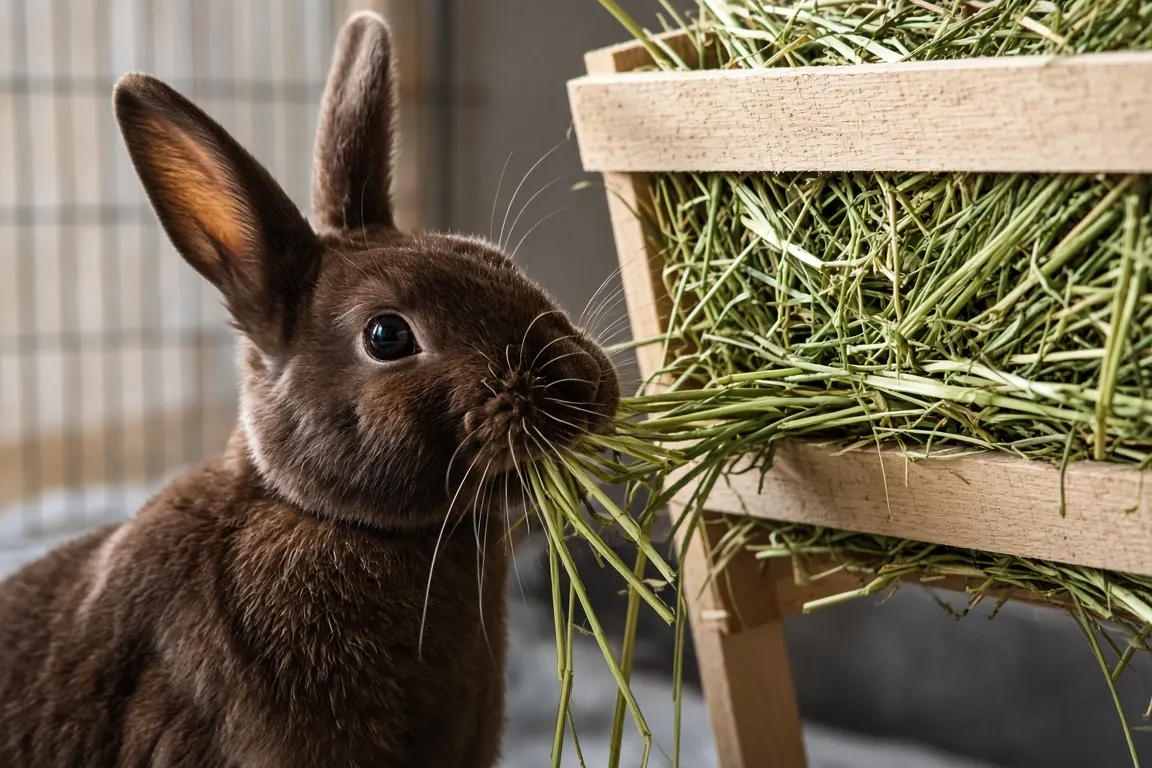
Rabbits and guinea pigs are built to graze almost constantly. Their intestines rely on a steady flow of long fiber to keep contents moving. When eating stops, gas builds up, the belly becomes painful, pain suppresses appetite further, and the spiral tightens quickly. Treatment is usually successful when it starts early and much harder once the animal is cold and flat.
There's often more going on than grief alone. Dental problems are extremely common in older rabbits: in a UK study of rabbits with dental disease that died, it was a primary or contributing cause in 51.2%[1] of deaths. A survivor with sore teeth who was already a slow eater can go downhill faster once stress is added.
Know your baseline
What normal eating and droppings look like
You can't spot a change unless you know what normal looks like for your pet. Spend a minute looking closely today, before anything is wrong.
| Rabbit | Guinea pig | |
|---|---|---|
| Shape | Round, pea-sized balls | Oval, bean-shaped pellets |
| Texture | Firm, crumbly when squashed, visible hay fiber | Firm, slightly glossy, not mushy |
| Amount | Hundreds a day, a steady trickle in the litter tray | Many a day, scattered where they eat and rest |
| Eating pattern | Grazes hay on and off around the clock, busiest at dawn and dusk | Eats in frequent small bouts, often vocal at veg time |
| Other | Soft, shiny cecotropes eaten straight from the bottom, usually unseen | Also eats cecotropes; you rarely see them |
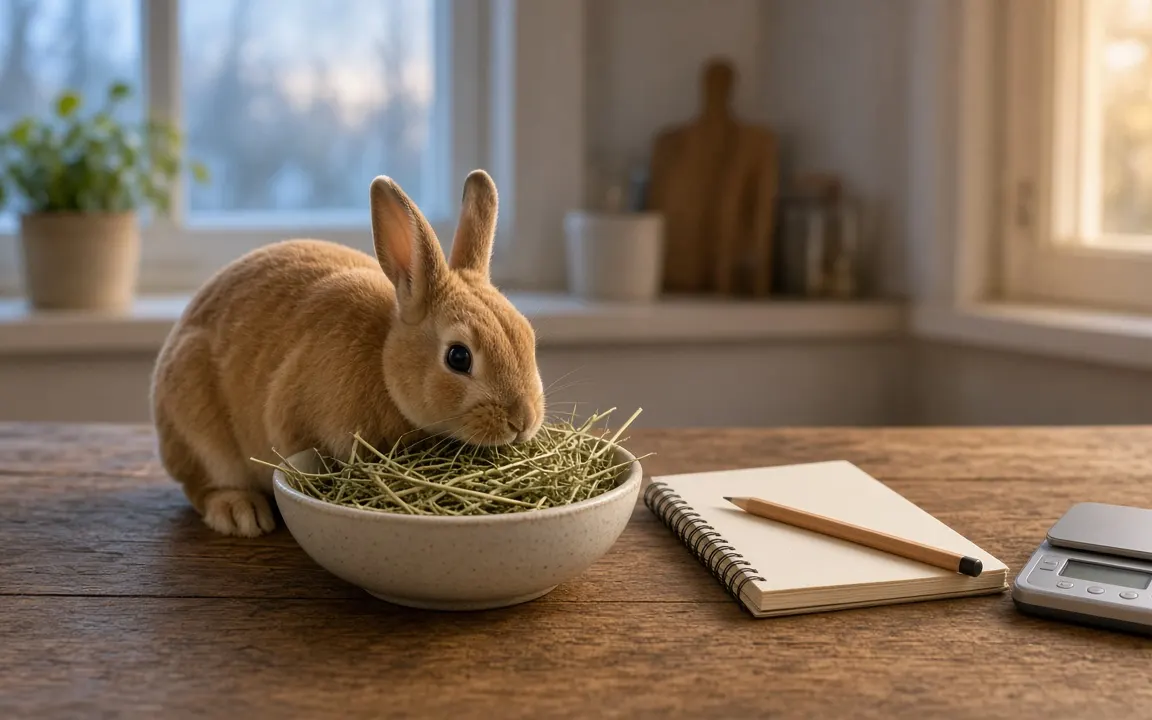
The earliest warning is often the droppings, not the food bowl. Pellets that shrink, dry out, become misshapen or strung together with fur tell you the gut is slowing, sometimes before appetite visibly drops. A daily weight on a kitchen scale is the other quiet early signal.
The first days
A 12- and 24-hour check schedule for the survivor
For the first week after a loss, build four quick checks into your day. Clean the litter tray or sweep one corner of the pen at a set time so you can see fresh output rather than guessing.
- Morning (on waking). Is there a good pile of fresh droppings since last night? Does your pet come forward for greens? Weigh them and write it down.
- Midday. Has the hay level dropped? Offer a favorite herb by hand. If they refuse a treat they normally grab, that's worth noting.
- Evening. Look again at the tray. By now you've covered roughly 12 hours; if there are no new droppings and no eating, call a vet now rather than waiting for morning.
- Bedtime. A final look at posture and a feel of the ears. Cold ears plus a hunched pet is a reason to go to an emergency clinic tonight.
Over any 24 hours, weight should be roughly steady. A drop of more than a few percent in a day or two, together with less output, means the gut is struggling. If you'd like to understand where your pet sits in their lifespan while you're watching them, the pet age calculator gives a human-years comparison; UK rabbits have a median age at death of 4.3 years[2], so many survivors are already seniors.
Emergency signs
Red flags that mean go to the vet now
- No droppings, or only a few tiny dry ones, for 8 to 12 hours
- Refuses hay, greens and a favorite treat
- Sitting hunched and pressed into a corner, reluctant to move
- Loud, slow tooth grinding (quiet purring grinding while being stroked is normal)
- A tight, swollen or gurgling belly, or pressing the belly to the floor
- Cold ears and feet, or seeming flat and unresponsive
- In guinea pigs: sitting fluffed up, not squeaking for food, or drooling
Guinea pigs deserve special mention. They hide illness well and can develop liver problems when they go without food, so a guinea pig that stops eating is also a same-day vet visit. Guinea pigs in the UK have a median age at death of 4.03 years[3], and a surviving older sow or boar has little reserve to spare.
While you travel
What to do while you get to an exotics vet
Not every clinic treats rabbits and guinea pigs well, so it helps to find an exotics-experienced practice and an out-of-hours option now, while things are calm. Save both numbers in your phone.
- Keep them warm. Line the carrier with a towel and, if their ears feel cold, add a wrapped warm (not hot) water bottle at one end so they can move away from it.
- Bring food. Put a handful of their usual hay and greens in the carrier, both to tempt them and to show the vet what they normally eat.
- Bring evidence. A few recent droppings in a sandwich bag and your notes on weight and timings are genuinely useful.
- Travel calmly. Keep the car cool and quiet. Some owners bring a piece of fleece from the shared bed for comfort.
It's also worth mentioning to the vet how the partner died. If a rabbit died suddenly without a clear cause, rabbit hemorrhagic disease is a real concern: RHDV2 kills 50-100%[4] of infected rabbits, and the survivor may be at risk too. The USDA's advice is to consult before disposal[5], speaking to a vet or animal health officials first, so don't bury the body before that conversation.
Two things at once
Fitting the vet visit around aftercare decisions
When a partner has just died, it can feel like you have to deal with the body first. You don't. The pet who died can wait; the one who is alive and not eating can't. Wrap the body in a towel, place it in a box and keep it in the coolest room of the house, or in a sealed bag in a spare fridge for a day or two, while you take the survivor in. Our guide to what to do when your rabbit dies covers the rest once they're settled.
Often the two errands combine neatly. Many vets will hold the body in their cold room while treating the survivor, and can tell you about local cremation options. If the cause of death is unclear, you can ask about a post-mortem examination, which can reveal something that matters for the survivor. Our guide to coordinating with your vet at the end of life explains how clinics usually hand over to aftercare providers.
Which small companion are you thinking about today?
Tap an answer to vote and see how others answered. Anonymous.
Once the survivor is stable, the choices are simpler than they seem. By our estimate a median-weight rabbit returns roughly 74 g[6] of ashes from a private cremation, and the aftercare options comparison sets burial against private and communal cremation. If you'd like someone else to gather prices, tell us about your pet and we'll email options.

Free tool
Aftercare options compared
Compare private, communal and water cremation with burial on cost, timing and what comes home.
Afterwards
Keeping the gut moving over the following weeks
Once your vet has the survivor eating again, prevention is about fiber, movement and company. Unlimited hay, daily floor time for exercise and a steady routine all help. Many rabbits eat better with someone beside them, which is one reason a new companion can matter. The bonded pair survivor care guide covers loneliness, routine and rebonding in depth.
Look after yourself as well. Nursing a sick survivor while grieving is exhausting, and our piece on grief after losing a small pet may help on the harder evenings.

Reader polls
What would you choose?
Vote anonymously and see how other readers answered. The results are live counts from people who visit this site, so they show real opinions, not a scientific sample.
Which small companion are you thinking about today?
Tap an answer to vote and see how others answered. Anonymous.
When did you (or will you) decide on aftercare?
Tap an answer to vote and see how others answered. Anonymous.
What was the hardest part of losing your pet?
Tap an answer to vote and see how others answered. Anonymous.

Questions people ask
How long can a rabbit go without eating before it's an emergency?
Treat around 12 hours without eating or passing droppings as an emergency, and sooner if your rabbit is hunched, grinding its teeth loudly or has cold ears. Many exotics vets would rather see a rabbit early and send it home than meet it after a full day of stasis, when treatment is harder.
Can guinea pigs get GI stasis too?
Yes. Guinea pigs have a similar hindgut system and can develop gut slowdown and bloat, often triggered by stress, pain or dental disease. They also risk liver complications when they stop eating. A guinea pig that ignores its veg or stops squeaking at feeding time should see a vet the same day.
What do GI stasis droppings look like?
They get smaller, harder, darker and fewer, and may be misshapen or strung together with fur. Sometimes they stop completely. Occasionally a rabbit passes a little mucus. Compare with your pet's usual pea-sized, crumbly rabbit droppings or plump guinea pig pellets, and call the vet if output drops sharply.
Should I syringe-feed my rabbit if it stops eating?
Only after a vet has examined your rabbit and advised it. Syringe feeding is a common part of stasis treatment, but if there's a blockage, pushing food in can make things worse. Your vet can check the belly, often with an X-ray, and show you how much to give and how often.
Can I leave my dead rabbit at home while I take the other one to the vet?
Yes. Wrap the body in a towel and put it in a box in the coolest part of your home, away from other pets. A small body will keep for several hours like this, and longer in a cool room or a sealed bag in a fridge. Getting the survivor seen comes first.
Is it grief or stasis if my rabbit is lying still?
A grieving rabbit often lies stretched out or loafed and still eats and passes droppings. A rabbit in stasis tends to sit hunched and tense, refuse food and produce few or no droppings. If you can't tell, check output and weight; when in doubt, phone an exotics vet.
Keep reading

More small pet guides
Survivor care, home goodbyes and urn choices for rabbits and guinea pigs.

Aftercare services
What private, communal and joint cremation look like for small pets.

Planning tools
Compare aftercare choices and estimate costs and ashes.

Get options by email
Tell us about your pet and we'll reply with local options.
Sources and our estimates
- [1] Dental disease was the primary or a contributory reason for death in 51.2% of UK rabbit dental cases that died. Jackson MA et al. Dental disease in rabbits under UK primary veterinary care. Veterinary Record, 2025 (PMID 40178508), 2025.
- [2] Pet rabbits in England have a median age at death of 4.3 years. O'Neill et al. 2020, Veterinary Record - VetCompass rabbits, 2020.
- [3] From 757 recorded deaths, UK pet guinea pigs had a median age at death of 4.03 years and a median adult bodyweight of 1.05 kg. O'Neill DG et al. Demography, commonly diagnosed disorders and mortality of guinea pigs under primary veterinary care in the UK in 2019. PLoS One, 2024 (PMID 38536813), 2024.
- [4] Rabbit hemorrhagic disease (RHDV2) kills 50-100% of infected rabbits; the first U.S. detection was in a pet rabbit in Ohio in 2018. USDA APHIS - Rabbit Hemorrhagic Disease, 2018.
- [5] USDA advises rabbit owners not to dispose of a rabbit carcass without first consulting a veterinarian or state or federal animal health officials because of RHDV2. USDA APHIS - Rabbit Hemorrhagic Disease, 2024.
- [6] A median-weight adult pet rabbit (2.1 kg) would be expected to return about 74 g (2.6 oz) of cremated remains. Our estimate: 2,100 g x 3.5%. How we calculate.
Get rabbit aftercare options while you focus on the survivor
Tell us what you need and where you are. We'll reply by email with clear options and prices so you can decide in your own time.