Cremation for rabbits, ferrets and chinchillas in Durham
From tiny amounts of ash to foxes digging in the garden, small pets raise their own questions. We answer them for Durham and can email you local options.
- Honest small-pet prices for Durham
- Private cremation with ashes returned
- Help for a grieving bonded partner
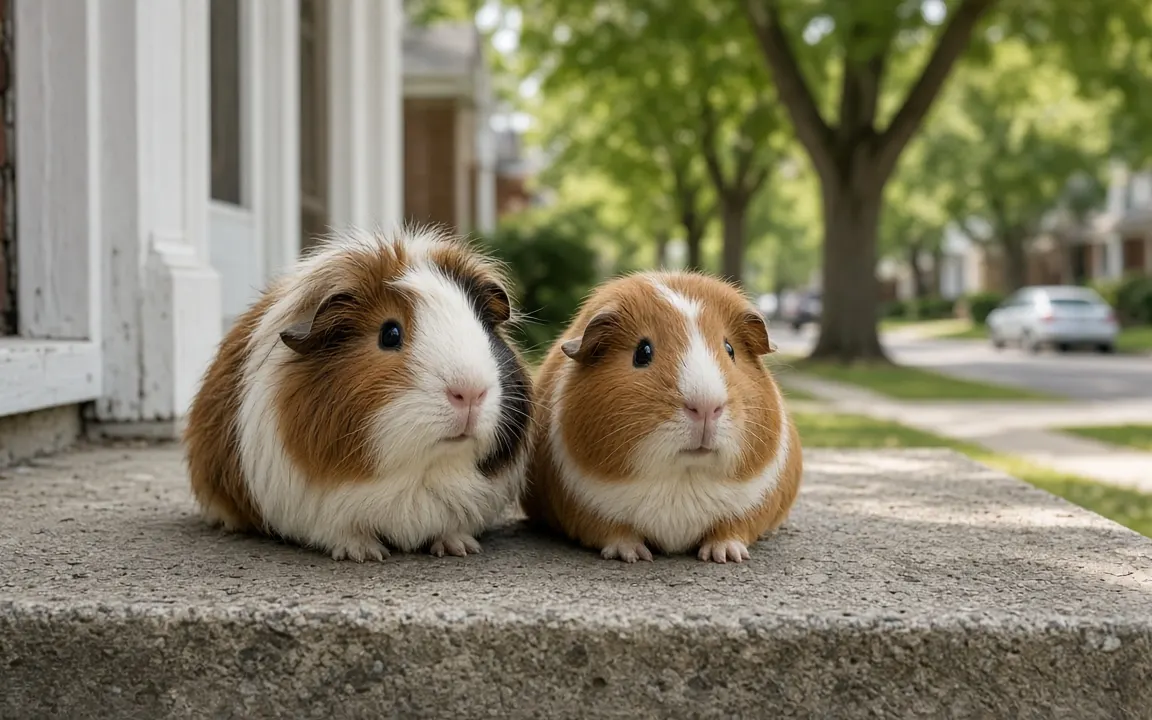
Durham, North Carolina
Finding the right help for a small pet in Durham
Durham is full of green spaces families love, from the Eno River's wooded trails to Duke Forest and the long American Tobacco Trail. Those are the places many families picture when they think about scattering ashes, but for public land, ask first. Many people keep ashes at home or plant something in their own yard, where it will thrive in the long growing season.
Durham has everything from older mill-village houses and bungalows near downtown to apartments by the universities and newer subdivisions toward the edges of the county. Most homes have easy access, so home collection is usually simple, but mention stairs, gates and parking when you ask. Providers may serve the whole Triangle, including Raleigh and Chapel Hill, so ask where the cremation itself takes place.
Ferret owners in Durham often carry a particular tiredness at the end. Many ferrets die of adrenal disease or insulinoma after months of treatment, and the family is worn out by the time the decision comes. Aftercare needn't add to that. Your vet can arrange cremation straight after the euthanasia, and you can take a keepsake, such as a clay print of a front paw, while you're still in the room.
With roughly 305,561 residents, Durham is the 4th-largest of the 64 North Carolina communities we cover. Some of the providers who serve Durham are based about 20 miles away in Raleigh, the nearest larger centre, so collection times reflect that drive.
Durham sits within easy reach of Chapel Hill (10 miles), Morrisville (11 miles) and Carrboro (12 miles). A provider based in any of them will usually collect from Durham; ask what the mileage adds to the bill.
57.3%[1]
The NFDA projected North Carolina's cremation rate at 57.3% for 2024.
6 million[2]
About 6 million US households keep small animals such as rabbits, guinea pigs and hamsters.
4.3 years[3]
Pet rabbits in England have a median age at death of 4.3 years.
3-5% of body weight[4]
Embrace notes cremated remains typically weigh about 3-5% of the pet's original body weight.
If a number here surprises you, the primary material is American Pet Products Association (APPA) 2025 National Pet Owners Survey release and O'Neill et al. 2020, Veterinary Record; we only apply it to this.
Local funeral customs and a very small pet
In North Carolina, about 57.3%[1] of people are cremated. Pet crematoria are established around most larger towns, and they take rabbits, ferrets and chinchillas as a matter of routine. If you're torn between a garden grave and cremation, one simple test helps: will you still live here in five years, and does it matter to you that your pet comes along if you don't?
For the North Carolina figure we rely on NFDA 2024 Cremation & Burial Report state projections (via Occasional Sage) (2024). Read it as a picture of local custom around death and remembrance in Durham rather than as pet data.
Heat, cold and timing in Durham
If a long weekend or holiday means no crematorium in Durham can take your pet for several days during June, July and August, a freezer is the kindest place for a small body. Seal your pet in a freezer bag, set it in a small box and freeze it. Tell the crematorium when you drop your pet off; there's no need to defrost first, and it makes no difference to a private cremation.
Durham summers are hard on small mammals. July averages highs around 91°F, and rabbits and chinchillas start struggling with heat well before that, often once it climbs past the high 70s. Heatstroke is one of the most common reasons an otherwise healthy rabbit dies suddenly in summer. If it happens, bring your pet indoors, wrap them loosely in a towel and keep them in the coolest room while you make a plan.
Pricing a private cremation for a pocket pet in Durham
Why doesn't a two-pound rabbit cost a tenth of what a large dog does? Because much of the price is handling, paperwork and returning the ashes, not fuel. By our estimate, private cremation costs about $9 per pound for a 15 lb pet but nearer $4 per pound at 100 lb[5], so the smallest pets pay the most per pound. For Durham families, the practical lesson is to compare total prices, not weight bands.
Prices for Durham track the wider North Carolina market, so use the North Carolina price table as your baseline and the services page to see what is included.

Free tool
Cremation cost calculator
Estimate a realistic price range for your pet's size, location and the type of cremation.
What North Carolina allows for small pets
Scattering rules rarely cause problems with a small pet, because a rabbit or guinea pig produces so little, rarely more than a small cupful and often much less. Private land with permission is fine almost everywhere. Parks, beaches and nature reserves in North Carolina may have their own rules, so check before you go. Many families end up burying the ashes instead, which avoids the question and gives them a fixed place to visit.
Not sure which office covers Durham? The North Carolina local government directory is the official list.
The rules that apply across North Carolina (home burial, scattering and who oversees pet cremation) are summarized on our North Carolina page. Durham may add its own conditions, so check with the city or county before digging.
A checklist for Durham small-pet owners
- Put on gloves before touching a rabbit that died without warning or had blood around the mouth or nose. Hands, clothing and bedding can all carry RHDV2.
- Place your rabbit in a sealed bag inside a lidded box, and keep the other rabbits away from the body and the hutch.
- Phone your vet before burying or disposing of anything. US federal guidance says to speak with a vet or an animal health official before you act.
- Bag the hay, bedding and litter and keep it apart until your vet tells you how to dispose of it.
- Scrub the enclosure, dishes and water bottle with a disinfectant your vet recommends, then let everything dry fully.
- Ask about testing and vaccination for the survivors. Cremation is usually the safest choice for the body while you wait for answers.
Ways Durham families remember rabbits and guinea pigs
Durham's summers are long, hot and humid, and a pet's body needs cooling within a few hours between June and September: a towel, ice packs near the belly and an air-conditioned room. Winters are short and mild, so backyard burial is usually possible, though the red clay soil is heavy work. Hurricane remnants and summer storms can knock out power, so keep a plan for cooling if that happens.
browse in-depth guides or recent articles, the planning tools turn your pet's details into figures, or look at how readers voted in our polls, Our services overview lays out every option side by side. More local pages: Charlotte, Fayetteville, Greensboro and Winston-Salem, the North Carolina overview and every city in the United States.

Reader polls
What would you choose?
Vote anonymously and see how other readers answered. The results are live counts from people who visit this site, so they show real opinions, not a scientific sample.
Was this (or will it be) your child's first experience of a pet dying?
Tap an answer to vote and see how others answered. Anonymous.
What would you most want to keep from your rabbit, guinea pig or ferret?
Tap an answer to vote and see how others answered. Anonymous.
If you had to decide today, which aftercare would you choose for your pet?
Tap an answer to vote and see how others answered. Anonymous.

Free tools to help you plan
Cremation cost calculator
Estimate a realistic price range for your pet's size, location and the type of cremation.

Ashes weight estimator
See roughly how much ash to expect back, by species and body weight.

Aftercare options compared
Compare private, communal and water cremation with burial on cost, timing and what comes home.
Questions people ask
How does Durham's weather affect small pet aftercare?
July is the hottest month in Durham, with average highs around 91°F, so prompt collection matters most then. Average lows drop below freezing in January, which can make digging a grave hard until spring.
Which nearby towns can I compare with Durham?
The closest communities we cover are Chapel Hill (about 10 miles), Morrisville (about 11 miles) and Carrboro (about 12 miles). Providers based in those places often serve Durham too. Ask each one for a written total that includes collection, so the distance is priced in.
Is cremation common in North Carolina?
For people, yes: about 57.3%[1] of North Carolina deaths end in cremation, according to NFDA 2024 Cremation & Burial Report state projections (via Occasional Sage) (2024). Nobody publishes the same figure for pets, but in our experience pet choices in Durham follow the human pattern closely, so cremation is the default most families here start from.
Where are the providers that serve Durham actually based?
Some are local, and some run from Raleigh, about 20 miles away. That is normal for a city this size. What matters is the collection time they quote for Durham and whether the drive is priced into the total, so ask both up front.
Do chinchillas need anything different at the end?
Chinchillas are sensitive to heat, stress and handling, so a calm, cool room matters. A vet experienced with chinchillas may suggest sedation before euthanasia. Afterwards, because a chinchilla usually weighs well under a kilo, a private cremation returns only a tablespoon or two of ash. Their dense fur makes a lovely keepsake clipping if it's taken before cremation.
How long does it take to get small pet ashes back in Durham?
Many families receive private cremation ashes in about 5-10 days[7], sometimes sooner if you drop your pet off yourself. Where the crematorium collects from vets only once or twice a week, it can take longer. Ask for an expected date when you book, and whether you can collect in person rather than waiting for the vet's next delivery.


Sources and our estimates
- [1] The NFDA projected North Carolina's cremation rate at 57.3% for 2024. NFDA 2024 Cremation & Burial Report state projections (via Occasional Sage), 2024.
- [2] About 6 million US households keep small animals such as rabbits, guinea pigs and hamsters. American Pet Products Association (APPA) 2025 National Pet Owners Survey release, 2025.
- [3] Pet rabbits in England have a median age at death of 4.3 years. O'Neill et al. 2020, Veterinary Record - VetCompass rabbits, 2020.
- [4] Embrace notes cremated remains typically weigh about 3-5% of the pet's original body weight. Embrace Pet Insurance - Bury or Cremate Your Dog? Costs, Pros & Cons, 2025.
- [5] Private cremation cost per pound falls with size in the US: roughly $9.2/lb for a 15 lb pet, $4.2/lb at 60 lb and about $4.0/lb at 100 lb. Our estimate: band midpoint price / representative weight: 0-30 lb (midpoint $137.50 / 15 lb) = $9.17/lb; 51-70 lb ($250 / 60 lb) = $4.17/lb; over 90 lb ($400 / ~100 lb) = $4.00/lb. How we calculate.
- [6] A median-weight pet guinea pig (1.05 kg) would be expected to return about 37 g (1.3 oz) of cremated remains. Our estimate: 1,050 g x 3.5%. How we calculate.
- [7] A US aftercare guide says many families receive private cremation ashes within about one to two weeks, with 5-10 days commonly quoted. Funeral.com - Pet Cremation Timelines: How Long Until Ashes Are Returned, 2026.
Tell us about your rabbit or guinea pig
Tell us what you need and where you are. We'll reply by email with clear options and prices so you can decide in your own time.