How to tell your child their rabbit or guinea pig has died
In a UK survey, 93.4%[1] of parents said they wanted better guidance on helping children through pet loss. For many kids, a small pet's death is the first loss they'll ever face, and how it's handled stays with them.
By the Small Mammal Cremation Services editorial team · Updated September 24, 2026 · 6 min read · Sources
- Honest, simple words for every age
- Ways to include children in the goodbye
- What to expect in the months after
The short answer
What should you say to a child when their pet dies?
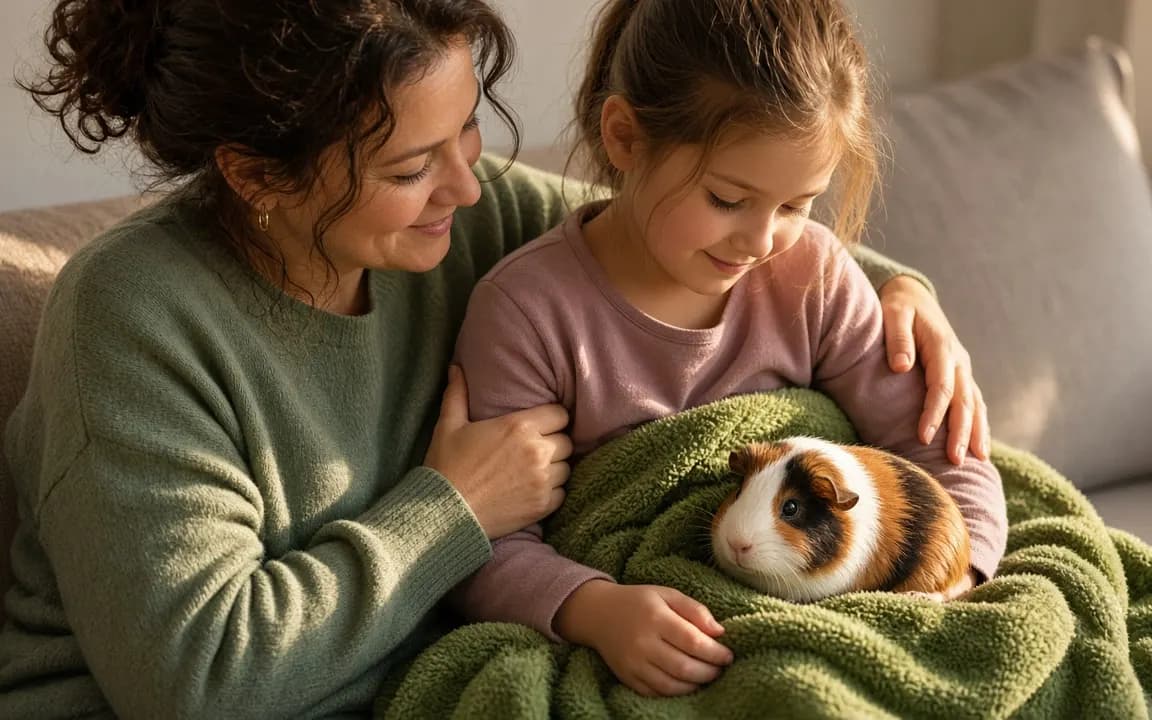
Tell them soon, simply and truthfully, using the word "died". For example: "I have some very sad news. Pepper died this morning. Her body stopped working, and she can't eat, breathe or feel anything anymore, so she isn't hurting." Then stop, let them react, and answer their questions as honestly as you can for their age.
Children cope with sad truths far better than with confusing half-truths. They notice when adults are upset, and silence leaves them to fill the gaps with their own, often scarier, explanations. You don't need perfect words; being calm, close and honest does most of the work. You're not alone in wanting help with this: in the RSPCA's pet-loss survey, 93.4%[1] of parents said they wanted better guidance on helping children through it.
Small pets are often bought for children. About 6 million[2] US households keep small animals such as rabbits and guinea pigs, according to the American Pet Products Association, and many of those pets live in children's bedrooms or family rooms. Their lives are short, too: UK pet guinea pigs have a median age at death of 4.03 years[3], so a guinea pig bought for a seven-year-old often dies before that child turns twelve. For many families, that is the first real loss a child experiences.
Was this (or will it be) your child's first experience of a pet dying?
Tap an answer to vote and see how others answered. Anonymous.
Words matter
Why "put to sleep" and "ran away" cause problems
Adults reach for soft phrases to protect children, but young children take words literally. "Put to sleep" can make bedtime frightening. "We lost him" suggests he might be found. "Gone away" or "ran away" can leave a child waiting at the window, or wondering whether they did something to make their pet leave.
| Instead of | Try |
|---|---|
| "She went to sleep." | "She died. Her body stopped working." |
| "We had to put him down." | "He was very ill and the vet couldn't make him better, so the vet gave him a medicine that let him die gently, without pain." |
| "She ran away / went to a farm." | "She died, and we're going to decide together how to say goodbye." |
| "Don't cry, we'll get another one." | "It's okay to be sad. I'm sad too. We loved him." |
If your family has religious or spiritual beliefs, share them in a way that fits, but it still helps to say clearly that the animal's body has died and won't come back. If euthanasia is planned, our quality of life and saying goodbye post can help you judge timing and decide whether older children want to be there.
Age by age
How children of different ages understand a pet's death
- Under 5. Toddlers and preschoolers don't yet grasp that death is permanent. Expect repeated questions, like "When is Biscuit coming back?", and answer the same way each time. Keep it very concrete and brief.
- Ages 5 to 8. Children start to understand permanence but often feel responsible. "Was it because I forgot to give him carrots?" is common. Tell them clearly that nothing they did or thought caused it.
- Ages 9 to 12. They understand death well and often want facts: what illness it was, what the vet did, what happens to the body. Honest detail usually reassures them more than vagueness.
- Teenagers. Treat them much as you would an adult. They may grieve privately or through friends and social media, and may want a real say in aftercare decisions.
Whatever the age, children grieve in bursts. A child can sob and then ask to go and play five minutes later. That isn't a sign they didn't care; it's how young minds take in something too big to hold all at once.
Being part of it
Should children help choose burial or cremation?
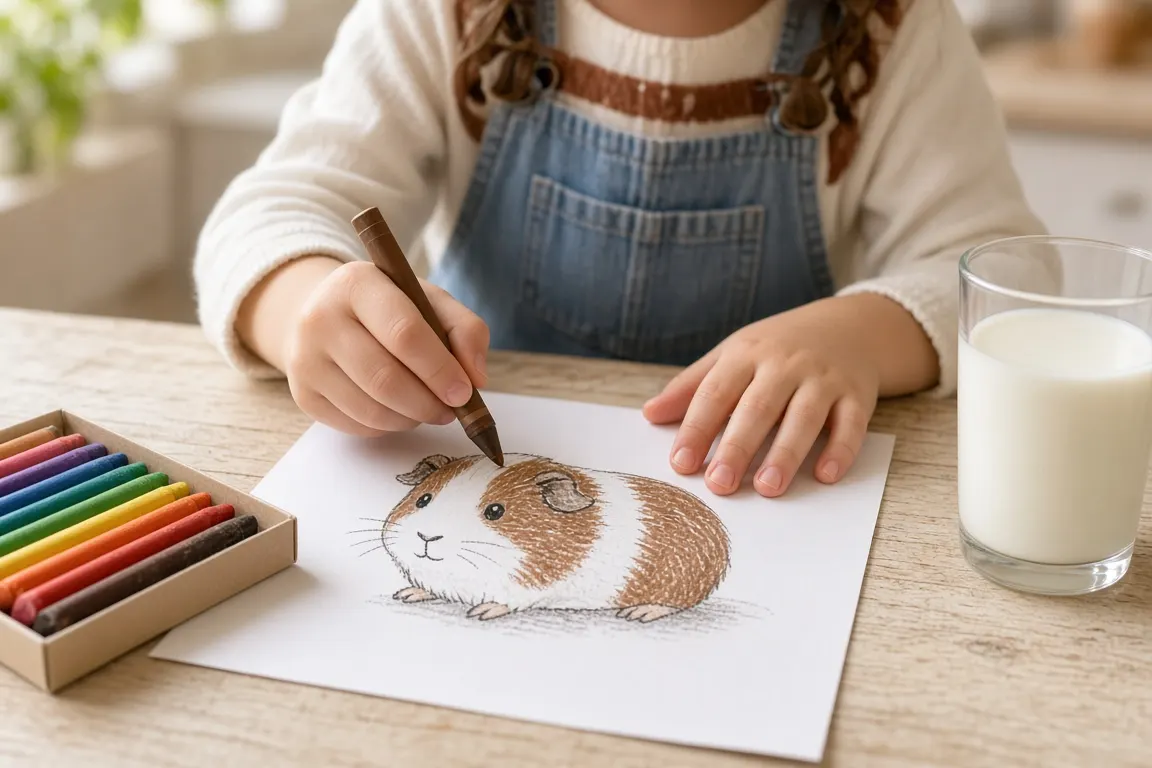
Children cope better when they have something to do. You make the decision, but you can give them real choices within it: which blanket the pet is wrapped in, what drawing or note goes with them, where in the garden a grave or planter goes, or which small urn comes home.
If you're thinking of a garden burial after euthanasia, remember the drug stays in the body. Since 2003[4] the FDA has required euthanasia drug labels to warn about scavenging wildlife, so the grave needs to be deep, or cremation may suit better. Our private vs communal cremation post explains which option brings ashes home, and the aftercare options comparison sets the choices side by side.

Free tool
Aftercare options compared
Compare private, communal and water cremation with burial on cost, timing and what comes home.
If siblings each want something to keep, plan it together. By our estimate a guinea pig returns only about 37 g[5] of ashes, so a few tiny keepsake tubes or a shared urn may work better than one each. The ashes sharing planner shows how far a small amount goes.
A common temptation
Should you secretly replace the pet?
Please don't. Swapping a dead guinea pig or rabbit for a lookalike from the pet shop is a well-known family story, but it rarely goes as planned. Children often notice a different personality, a new marking or a sudden change in behavior. When they find out, what they learn is that adults hide things when something sad happens.
A secret swap also takes away a gentle first chance to practice grief with you beside them. A small pet's death, handled honestly, teaches a child that sad feelings can be survived and shared. That lesson is worth far more than a few weeks of avoided tears.
Saying goodbye
Simple rituals, and letting school know
- A small ceremony. Gather in the garden or around the urn, share one favorite memory each, and let a child read something they wrote.
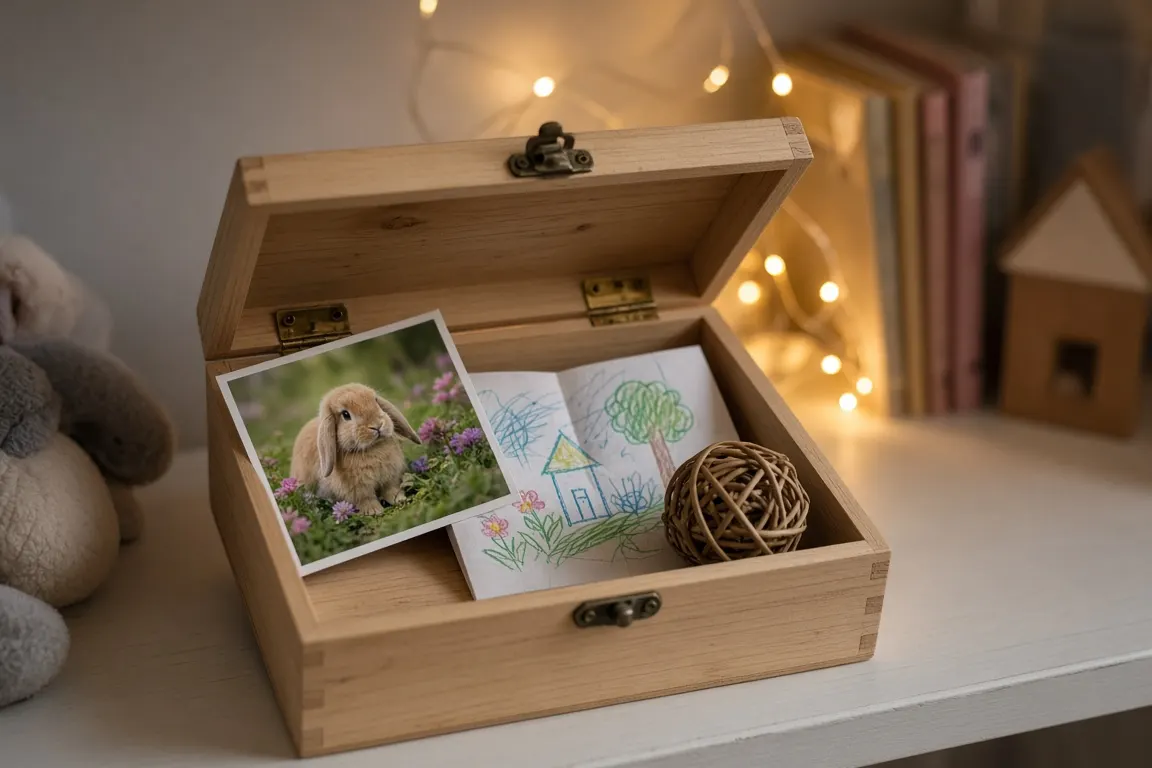
- A memory box. A photo, a clipping of fur, a favorite chew toy and a few drawings, kept somewhere the child can reach.
- Plant something. A flower or small shrub in a pot or bed, cared for by the child. Our memorial ideas post has more small-pet options.
- A letter to the pet. Many children find writing "Dear Pepper" easier than talking.
Send a quick note to your child's teacher. A child who seems distracted, tearful or unusually angry at school may be carrying the loss there, and a teacher who knows can respond kindly. Some classrooms had the guinea pig as a class pet, in which case the school may already be planning its own goodbye.
The months after
When grief shows up again later
Children's grief often returns at unexpected times: the pet's birthday, the first day back at school, when a friend's pet dies or when a grandparent is ill. Younger children may go back to earlier behaviors for a while, like wanting a light on at night or becoming clingy. Most of this passes with patience.
Keep talking about the pet by name. Look at photos together and tell funny stories. It shows your child that remembering is allowed. If months later a child is still very withdrawn, anxious or struggling at school, speak to your pediatrician or school counselor. You can also read our post on grief after losing a small pet for your own side of it.
When you're ready to arrange aftercare, tell us about your pet and we'll reply by email with options near you, including ones your children can be part of.

Reader polls
What would you choose?
Vote anonymously and see how other readers answered. The results are live counts from people who visit this site, so they show real opinions, not a scientific sample.
Was this (or will it be) your child's first experience of a pet dying?
Tap an answer to vote and see how others answered. Anonymous.
Who made (or will make) the aftercare decision in your household?
Tap an answer to vote and see how others answered. Anonymous.
Compared with losing a person, losing your pet felt...
Tap an answer to vote and see how others answered. Anonymous.


Questions people ask
Should I tell my child the truth about euthanasia?
Yes, in simple terms. Explain that the pet was very ill, the vet couldn't make them better, and the vet gave a special medicine that let them die peacefully without pain. Avoid "put to sleep", which can make young children afraid of sleep or anesthesia. Older children may want to know more, and honest detail usually helps.
Should my child see the pet's body?
If they want to, it often helps, particularly for children over about five. Wrap the pet in a soft blanket with the face visible and let your child stroke them if they'd like. Explain beforehand that the body will feel cool and won't move. Never force it; a child who chooses not to look can draw a picture instead.
Should children go to the vet for euthanasia?
It depends on the child's age and wishes. Many older children and teenagers want to be present and cope well when prepared. Younger children may do better saying goodbye beforehand and seeing the pet afterwards. Ask whether the vet can come to your home, which makes it easier to include everyone.
How long will my child be sad about their guinea pig?
Sadness usually eases over a few weeks but tends to reappear at reminders like birthdays, holidays or another loss. That's normal. Keep talking about the pet, answer questions whenever they come, and speak to your pediatrician if your child is still very withdrawn or anxious months later.
Is it okay to get a new pet right away for my child?
It's usually kinder to wait until your child has had time to grieve and can welcome a new pet for itself, not as a stand-in. The exception is a lonely bonded survivor that needs a companion, which you can explain openly. Never replace a pet in secret; children usually find out.
What should I say if my child thinks it's their fault?
Tell them directly and more than once that nothing they did, said or forgot caused the death. Explain in simple terms what did: illness, old age or a problem inside the body that nobody could see. Rabbits and guinea pigs hide illness well, which is why even adults and vets often don't notice.
Keep reading

More from the blog
Posts on grief, memorials and aftercare for families with small pets.

Guides for small pet owners
Home goodbyes, survivor care and choosing an urn.

Aftercare services
Burial and cremation choices for rabbits, guinea pigs and ferrets.

Ask for options
Tell us about your pet and we'll email what's available near you.
Sources and our estimates
- [1] 93.4% of parents in the RSPCA survey wanted better guidance on helping children through pet loss. RSPCA — Pet Loss Survey Results, 2026.
- [2] About 6 million US households keep small animals such as rabbits, guinea pigs and hamsters. American Pet Products Association (APPA) 2025 National Pet Owners Survey release, 2025.
- [3] Pet guinea pigs in the UK have a median age at death of 4.03 years. O'Neill et al. 2024, PLOS ONE - VetCompass guinea pigs, 2024.
- [4] Since 2003 the FDA has required euthanasia drug labels to warn that euthanized animals must be disposed of by deep burial, incineration or another approved method to keep scavenging wildlife from eating the carcass. Cornell Waste Management Institute & Penn State - Horse Mortality: Carcass Disposal Alternatives (2012), 2003.
- [5] A median-weight pet guinea pig (1.05 kg) would be expected to return about 37 g (1.3 oz) of cremated remains. Our estimate: 1,050 g x 3.5%. How we calculate.
Get gentle aftercare options for your family's pet
Tell us what you need and where you are. We'll reply by email with clear options and prices so you can decide in your own time.