How do you know when it's time to say goodbye to a small pet?
Rabbits, guinea pigs, ferrets, chinchillas and hedgehogs hide pain, so you judge their quality of life through small, steady changes in eating, weight, droppings, grooming and curiosity. When bad days start to outnumber good ones, it's time for an honest talk with your vet.
By the Small Mammal Cremation Services editorial team · Updated September 24, 2026 · 6 min read · Sources
- Pain and decline signs for each species
- A good-day, bad-day tally you can keep on the fridge
- Why a kitchen scale tells you more than your eyes
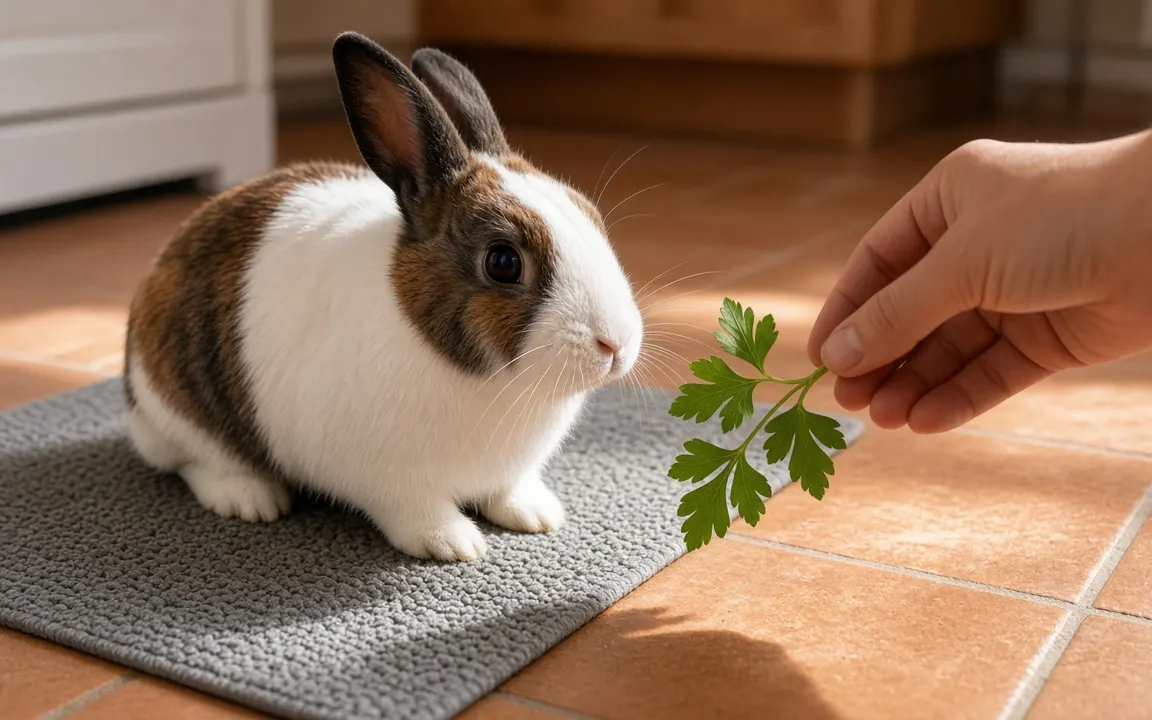
Rabbits
What signs of pain should you look for in a rabbit?
- Hunched posture. Sitting tucked up with the belly pressed down, eyes half closed, reluctant to stretch out or flop.
- Loud tooth grinding. A soft purr-like tooth rub while being stroked is contentment. A harsh, loud grind while sitting still is pain.
- Eating less, or nothing. A rabbit that stops eating for more than about twelve hours needs a vet that day.
- Fewer or smaller droppings. Tiny, dry or missing droppings often go hand in hand with gut slowdown.
- A dirty rear end. A rabbit that can no longer turn to clean itself, because of arthritis, weight or dental pain, collects droppings and urine in its fur.
That last sign is more serious than it looks. Flies lay eggs on soiled fur, and flystrike was the most common recorded cause of death in English pet rabbits, at 10.9%[4] of deaths. An older rabbit that needs its bottom cleaned daily and still gets soiled is telling you something about its comfort.
Teeth are the other big one. Rabbit teeth grow throughout life, and when they stop wearing evenly, sharp spurs cut the cheeks and tongue. In one UK study, dental disease was a primary or contributing reason for death in 51.2%[5] of rabbit dental cases that died. Repeated dental work under anaesthetic can keep a rabbit comfortable for years; when the gaps between dentals shrink to a few weeks, the balance shifts. If your rabbit's gut keeps slowing down, our GI stasis watch guide explains what to check hour by hour.
Guinea pigs, chinchillas, ferrets, hedgehogs
How do other small mammals show that they're declining?
Guinea pigs are chatty, so silence is a signal. A pig that stops wheeking at the fridge door, sits fluffed up and lets others push it off the food is unwell. Weight loss is the earliest measurable sign, often before you can see any change. Dental overgrowth and breathing problems are common in older pigs.
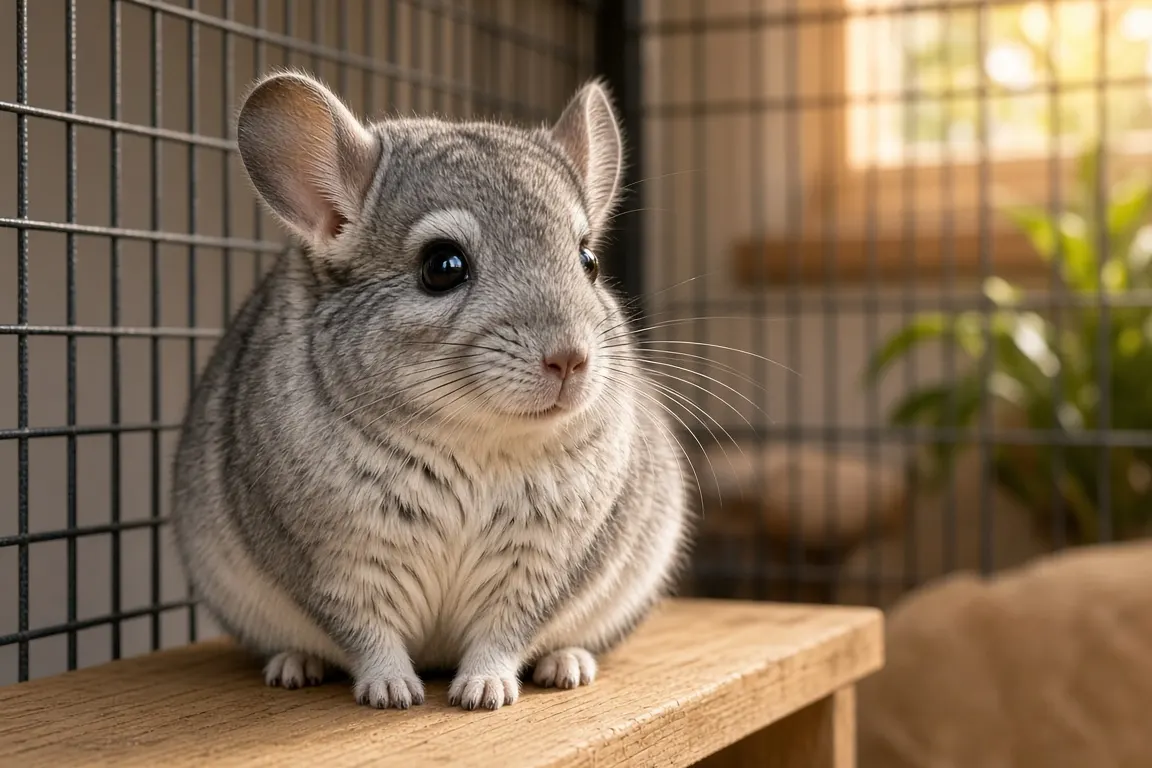
Chinchillas can live up to 20 years[6], which surprises many owners who bought one for a child. In old age their teeth are the usual problem: watch for a wet chin or chest from drooling, dropping food, or picking at hay without eating it.
Ferrets live about 6-10 years[7], according to the Merck Veterinary Manual's ferret profile. Two diseases dominate their later years. Adrenal disease often starts with hair loss from the tail upward, and can cause a swollen vulva in females or trouble urinating in males. Insulinoma causes blood sugar crashes: staring into space, drooling, pawing at the mouth and wobbly back legs. Both can be managed for a long time, but collapses that become more frequent despite treatment mark a turning point.
African pygmy hedgehogs usually live 4-6 years[8]. Tumours are sadly common: according to the Merck Veterinary Manual, more than 80% of those reported in pet hedgehogs are malignant[9]. Wobbly hedgehog syndrome is a progressive paralysis that begins with unsteady back legs and falling to one side. It has no cure, and in one study the median time from first signs to euthanasia was 51 days[10], which gives you a rough sense of how quickly it moves.
A simple record
How do you keep a good-day, bad-day tally?
Memory is kind in a way that doesn't help. On a sad evening one good hour can erase three bad days. A written tally stops that happening. Put a calendar on the fridge and each evening mark the day as good or bad using the same few questions.
| Question | Good day | Bad day |
|---|---|---|
| Did they eat without help? | Ate hay or kibble on their own | Needed syringe feeding or refused food |
| Were droppings normal? | Round, plentiful, usual size | Small, few, soft or none |
| Did they move around? | Explored, hopped or climbed | Stayed in one spot most of the day |
| Did they groom? | Clean coat and rear | Soiled or matted fur |
| Did they respond to you? | Came to the door, took a treat | Ignored you or hid |
Three or more yes answers counts as a good day. There's no magic threshold, but if a fortnight shows more bad days than good, or the bad ones are clustering, book a quality-of-life appointment rather than waiting for a crisis. Bring the calendar with you; vets find it genuinely useful.
The number that doesn't lie
Why weigh your pet every week on a kitchen scale?
Fur hides weight loss. A guinea pig can lose a tenth of its body weight and still look the same shape. A digital kitchen scale that reads in grams is the cheapest health monitor you can buy. Put a plastic tub or a shallow box on it, reset to zero, pop your pet in, and write down the number.
- Weigh on the same day each week, at about the same time, before the main meal.
- Record in grams, not pounds and ounces, so small changes show up.
- A median guinea pig weighs around 1,050 g[11] and a median rabbit around 2,100 g[12], so a 100 g drop means something for one and is worth watching in the other.
- Call your vet if weight falls for two weeks running, or drops by roughly 10% overall.
Our pet age calculator puts your pet's age in context, which helps when a vet asks whether a slow decline is age or illness.

Free tool
Pet age & senior years calculator
Convert your pet's age and see when senior-care and planning conversations usually start.
The decision
Is it kinder to decide a little early than too late?
Many vets and owners who have been through this more than once come to the same view: with animals that hide suffering, a week too soon is a smaller regret than a day too late. Because small mammals mask their decline, the last visible stage is often short and hard. A goodbye planned on a calm afternoon, while your pet can still enjoy a sprig of parsley, tends to sit easier in memory than a rushed night at an emergency clinic.
That doesn't mean acting on a single bad day. It means not waiting for certainty that may never come. Research on owners after euthanasia found grief was heavier when people felt shut out of the decision, and that support from the veterinary team was linked to less guilt[13]. So ask your vet to talk it through with you, and make it a shared decision.

When did you (or will you) decide on aftercare?
Tap an answer to vote and see how others answered. Anonymous.
Many owners feel grief long before the end; it's normal, and our piece on grief after losing a small pet speaks to it. When you're ready to plan, read about an at-home goodbye and working with your vet on end-of-life care.
Getting ready
What can you prepare while there are still good days?
Use the good days. Take photographs in the garden, give the favorite foods you'd been rationing, let a bonded partner and your pet share long lazy afternoons. Then spend twenty minutes on the practical side: burial or cremation, who you'll call, and roughly what you'll spend.
Our pre-planning guide walks through a one-page plan. If you'd like options near you gathered in advance, send a short request and we'll reply by email, with no pressure to decide anything yet.

Reader polls
What would you choose?
Vote anonymously and see how other readers answered. The results are live counts from people who visit this site, so they show real opinions, not a scientific sample.
Which small companion are you thinking about today?
Tap an answer to vote and see how others answered. Anonymous.
When did you (or will you) decide on aftercare?
Tap an answer to vote and see how others answered. Anonymous.
What was the hardest part of losing your pet?
Tap an answer to vote and see how others answered. Anonymous.


Questions people ask
Is tooth grinding always a sign of pain in rabbits?
No. A gentle, soft tooth rub, sometimes called purring, happens when a relaxed rabbit is being stroked. Pain grinding is louder and harsher, and the rabbit usually sits hunched and still with its eyes partly closed at the same time. If you hear grinding and your rabbit isn't eating or passing droppings, treat it as urgent.
Can a rabbit or guinea pig have a good life with a chronic illness?
Often, yes. Arthritis, dental disease, head tilt and heart problems can all be managed for months or years with medication and changes at home, such as lower litter trays and softer flooring. The question isn't whether your pet is ill, but whether they can still eat, move, keep clean and enjoy things. Your tally and weekly weights answer that.
How much weight loss is worrying in a guinea pig?
Any loss that continues for two weekly weigh-ins deserves a vet visit. As a rough rule, a drop of about 10% of normal body weight, around 100 g in a typical adult pig, is significant. Guinea pigs also can't make their own vitamin C, so poor appetite can quickly lead to other problems.
Will my vet tell me when it's time?
A good vet will give you an honest opinion if you ask directly, but many wait for owners to raise the subject. Try asking: if this were your pet, what would you do? Bring your tally and weights, and ask what the next few weeks are likely to look like with and without treatment.
Should I wait until my pet stops eating completely?
For a rabbit, guinea pig or chinchilla, complete refusal of food is itself a medical emergency, so waiting for it usually means the last day is spent in distress or at a clinic. If your pet has a condition that won't improve and appetite is fading, it's reasonable to decide before food stops altogether.
Does it help to keep a quality-of-life diary for a ferret?
Yes, especially with insulinoma. Note the date and time of every low-sugar episode, what it looked like and how quickly your ferret recovered after food. If episodes come closer together or stop responding to a snack, your vet can see that trend at a glance instead of relying on memory.


Sources and our estimates
- [1] Pet rabbits in England have a median age at death of 4.3 years. O'Neill et al. 2020, Veterinary Record - VetCompass rabbits, 2020.
- [2] Pet guinea pigs in the UK have a median age at death of 4.03 years. O'Neill et al. 2024, PLOS ONE - VetCompass guinea pigs, 2024.
- [3] Roughly 290,000 pet rabbits and guinea pigs may die in the UK each year (~116,000 rabbits, ~174,000 guinea pigs). Our estimate: UK rabbits (500k)/4.3 yrs + UK guinea pigs (700k)/4.03 yrs. How we calculate.
- [4] Myiasis (flystrike) was the most common recorded cause of death in English pet rabbits (10.9% of deaths). O'Neill DG et al. Morbidity and mortality of domestic rabbits under primary veterinary care in England. Veterinary Record, 2020 (PMID 31594841), 2020.
- [5] Dental disease was the primary or a contributory reason for death in 51.2% of UK rabbit dental cases that died. Jackson MA et al. Dental disease in rabbits under UK primary veterinary care. Veterinary Record, 2025 (PMID 40178508), 2025.
- [6] Chinchillas are long-lived rodents, with a lifespan of up to 20 years. Merck Veterinary Manual - Chinchillas (Exotic and Laboratory Animals).
- [7] Ferrets live about 6-10 years; males average about 4 lb (2 kg) and females 2.5 lb (1.2 kg). Merck Veterinary Manual - Table: Ferrets at a Glance.
- [8] African pygmy hedgehogs live an average of 4-6 years; adult males weigh 400-600 g and females 300-400 g. Merck Veterinary Manual - Overview of Hedgehogs.
- [9] More than 80% of tumors reported in pet hedgehogs are malignant; most are found in hedgehogs over 3 years old. Merck Veterinary Manual - Diseases of Hedgehogs.
- [10] In one study, the median time from first signs of wobbly hedgehog syndrome to euthanasia was 51 days. Merck Veterinary Manual - Diseases of Hedgehogs.
- [11] From 757 recorded deaths, UK pet guinea pigs had a median age at death of 4.03 years and a median adult bodyweight of 1.05 kg. O'Neill DG et al. Demography, commonly diagnosed disorders and mortality of guinea pigs under primary veterinary care in the UK in 2019. PLoS One, 2024 (PMID 38536813), 2024.
- [12] Pet rabbits in England that died had a median age at death of 4.3 years, with a median adult bodyweight of 2.1 kg. O'Neill DG et al. Morbidity and mortality of domestic rabbits under primary veterinary care in England. Veterinary Record, 2020 (PMID 31594841), 2020.
- [13] In the 2025 euthanasia-and-grief study, grief intensity rose with feeling excluded from the euthanasia decision by the vet and with regret over euthanizing too early; perceived emotional support from the veterinary team was linked to less guilt. 'Euthanasia and prolonged grief: A cross-sectional study with bereaved pet owners', Journal of Veterinary Behavior 79:60-67 (2025), Univ. of Lisbon research portal, 2025.
Get aftercare options in place quietly
Tell us what you need and where you are. We'll reply by email with clear options and prices so you can decide in your own time.