Planning your small pet's aftercare while they're still well
Twenty quiet minutes now saves you five hard decisions later: burial or cremation, where, who decides, what you'll spend and who you'll call. Write the answers on one page and keep it with your pet's vet records.
By the Small Mammal Cremation Services editorial team · Updated September 24, 2026 · 5 min read · Sources
- The decisions worth making before you need to
- A one-page plan you can fill in tonight
- Real price ranges for cremation, burial and keepsakes

The short answer
Why plan aftercare while your small pet is healthy?
Because small mammals often decline quickly and die at awkward times, and the decisions are much easier with a clear head. A rabbit that was eating on Friday can be gravely ill by Sunday night. If you already know whether you want burial or cremation, and whose number to ring, the worst evening of the year becomes one phone call instead of a frantic search.
Their lives are short, too. The median age at death in UK VetCompass records was 4.3 years[1] for rabbits and 4.03 years[2] for guinea pigs. And many owners find the grief starts early: in the RSPCA's pet-loss survey, 75.4%[3] of respondents felt anticipatory grief before their pet died. Putting some of that feeling into practical planning can help rather than hurt.
Planning doesn't mean expecting the worst. Many people write the plan when a pet reaches middle age, after a scare at the vet, or when a bonded partner has died and they realise the survivor is next.
What to decide
Which aftercare decisions can you make now?
- Burial or cremation? Home burial suits owners with their own garden and no plans to move. Cremation suits renters, flat dwellers and anyone who wants to keep or scatter ashes.
- If cremation, private or communal? Private returns only your pet's ashes; communal returns none but costs less. Our guide to private versus communal cremation explains the trade-off.
- Where would the goodbye happen? Clinic, or at home with a visiting vet? Our at-home goodbye guide covers the second.
- Who has the final say? In a family, agree now who decides, and whether children will be involved.
- What's the budget? A number you're comfortable with stops upselling at a weak moment.
- Which keepsakes? A fur clipping, a clay foot impression, a small urn, or photographs only.
Would you pre-pay for aftercare while your pet is still healthy?
Tap an answer to vote and see how others answered. Anonymous.
The plan
What goes on a one-page aftercare plan?
Keep it short enough to read in a minute when you're upset. Print it, put a copy in the drawer with your pet's vaccination card or insurance papers, and email one to whoever else might need it.
| Item | Example answer |
|---|---|
| Pet's name, species, weight | Pepper, Netherland Dwarf rabbit, 1.1 kg |
| Usual vet and out-of-hours number | Practice name, phone, emergency clinic phone |
| Where we'd prefer the goodbye | At home if possible, clinic if not |
| Aftercare choice | Private cremation, ashes returned |
| Provider and price | Name, phone, quoted total |
| Keepsakes to make before collection | Fur clipping, clay foot impression |
| Who decides and who to tell | Both adults; tell the children together |
| Bonded partner | Let Salt stay with Pepper for an hour |
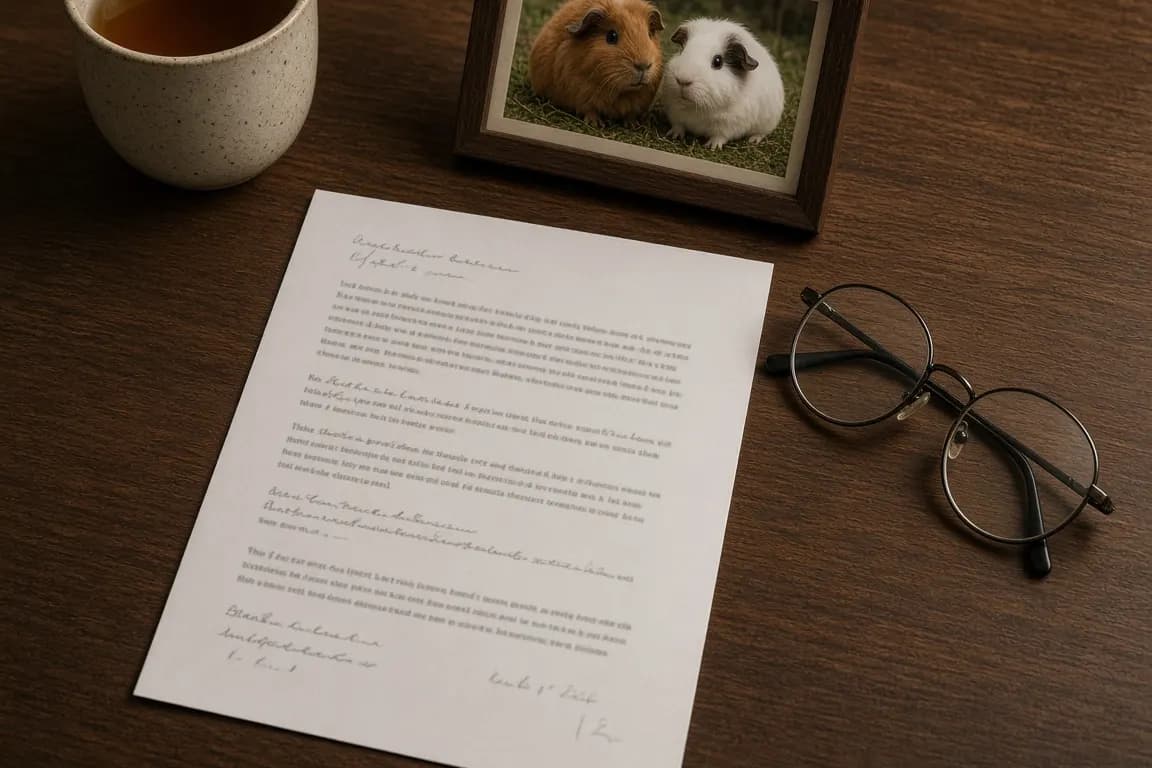
Revisit the plan once a year, perhaps on your pet's birthday or adoption day. Prices and providers change, and so do your circumstances.
Money
What will aftercare cost, and how do you set a budget?
Small mammals sit in the lightest price band. CareCredit's US guide lists communal cremation at $45 to $75 and private at $100 to $175 for pets up to 30 lb[4]. Home burial costs little beyond a box and a marker; a whole-body burial in a pet cemetery is far more, with a median of about $350 across five posted US price lists we checked (our estimate)[5].
- Keepsake or mini urns: $15–$60[6].
- Engraved garden stones: from $38.95[7].
- Ashes jewelry: $30 to over $300[8].
- Euthanasia itself, clinic or home, is a separate fee from all of these.
Some US insurers sell end-of-life add-ons. Lemonade's, for example, cost $3.75 a month and reimbursed up to $500 for euthanasia, cremation and memorial items[9]; check whether your policy covers small mammals before relying on it. The budget planner below adds these together, and our guide to comparing cremation quotes shows what to ask a provider.

Free tool
Memorial budget planner
Add up cremation, urn, keepsakes and a farewell so the total holds no surprises.
Housing
What if you rent or might move house?
A garden grave stays behind when you move, and many tenancy agreements don't allow burial at all. That's the main reason renters choose private cremation: the ashes travel with you. A large, deep planter is a middle path some owners take, though it needs to be deep enough that nothing can dig into it.
The ashes from a small pet are only a few spoonfuls. Our estimates put a median guinea pig at about 37 g[10] and a median rabbit at about 74 g[11], so a keepsake-size urn is often plenty. The urn size calculator gives an exact capacity, and our urn selection guide covers materials and openings.
Two at once
How do you plan aftercare for a bonded pair?
With a pair or a small group, your plan covers two things: aftercare for the one who dies, and care for the one left. Write down that the survivor should be allowed time with the body (our article on whether a bonded rabbit needs to see the body explains why), and who will watch their eating afterwards. Our bonded-pair survivor care guide explains why that matters for rabbits and guinea pigs.
Many owners also decide early that the pair will share a resting place. With private cremation, you can keep the first pet's ashes and later ask for the second's to be added to the same urn, or scatter both together. Put that wish on the plan so a future provider knows.
Longer lives
What if your chinchilla or ferret outlives your plans?
Not every small pet is short-lived. Chinchillas can live up to 20 years[12], according to the Merck Veterinary Manual, and ferrets usually manage 6-10 years[13]. A chinchilla bought for a ten-year-old may still be alive when that child leaves for university, so the plan needs an owner as well as an aftercare choice.
- Name a person who would take your pet if you couldn't, and ask them first.
- Mention your pet in your will, or in a letter kept with it.
- Update the plan when you move, change vets or someone leaves home.
- Use the pet age calculator to see which life stage your pet is in now.
When the time comes, our piece on judging quality of life helps with the hardest call. For more on marking a life afterwards, see memorial ideas for small pets. And if you'd like local provider names and prices for your plan, send us a request and we'll reply by email.

Reader polls
What would you choose?
Vote anonymously and see how other readers answered. The results are live counts from people who visit this site, so they show real opinions, not a scientific sample.
When you got your rabbit or guinea pig, how long did you expect them to live?
Tap an answer to vote and see how others answered. Anonymous.
Would you pre-pay for aftercare while your pet is still healthy?
Tap an answer to vote and see how others answered. Anonymous.
When did you (or will you) decide on aftercare?
Tap an answer to vote and see how others answered. Anonymous.

Free tools to help you plan
Memorial budget planner
Add up cremation, urn, keepsakes and a farewell so the total holds no surprises.
Pet age & senior years calculator
Convert your pet's age and see when senior-care and planning conversations usually start.

Urn size calculator
Find the urn volume you need from your pet's weight, plus keepsake and sharing options.
Questions people ask
Is it morbid to plan my pet's aftercare while they're healthy?
It can feel that way, but most owners who do it describe relief rather than sadness. Planning is a way of looking after your pet to the very end. It also means the decision is made by the calm version of you, not the one standing in an emergency clinic at midnight.
Can I pay for my pet's cremation in advance?
Some crematoria sell pre-paid plans or accept deposits, but most small-pet owners simply note the provider and price and pay at the time. If you do prepay, get the terms in writing, including what happens if you move out of the area, the company changes hands or you decide on burial instead.
How often should I update my small pet's aftercare plan?
Once a year is plenty for most people, plus any time something big changes: a house move, a new vet, a new bonded partner or a diagnosis. Prices drift upward, so ring your chosen provider for a fresh quote when you review it.
What should I include in a plan for several guinea pigs?
List each pig by name, weight and age, then note one aftercare choice that applies to all unless you say otherwise. Add who watches the survivors' appetite after a loss, and whether you'd want ashes combined. With a group, deaths can come close together, so a standing arrangement with one provider saves repeated phone calls.
Do I need to tell my vet about my aftercare plan?
It helps. Ask the practice to add a note to your pet's record, such as private cremation with a named provider, or body to be returned to the owner. Then, if your pet dies during treatment or an out-of-hours visit, the team knows your wishes and won't send your pet off by default.
What if my family disagrees about burial or cremation?
Talk it through now, while there's no pressure. Often the disagreement is really about something else: a child wanting a grave to visit, or an adult worried about moving house. Private cremation with a later burial of the ashes can satisfy both. Write down whatever you agree so nobody has to argue about it on the day.


Sources and our estimates
- [1] Pet rabbits in England have a median age at death of 4.3 years. O'Neill et al. 2020, Veterinary Record - VetCompass rabbits, 2020.
- [2] Pet guinea pigs in the UK have a median age at death of 4.03 years. O'Neill et al. 2024, PLOS ONE - VetCompass guinea pigs, 2024.
- [3] 75.4% of RSPCA pet-loss survey respondents experienced anticipatory grief before their pet died. RSPCA — Pet Loss Survey Results, 2026.
- [4] CareCredit's pet cremation guide lists US communal cremation at $45-$75 and private at $100-$175 for pets up to 30 lb. CareCredit (Synchrony) - How Much Does Pet Cremation Cost? (Sept 2023), 2023.
- [5] Across five posted US pet-cemetery price lists, the median whole-body burial for a small pet, including plot and opening/closing, was about $350. Our estimate: median of [Rainier $150 plot incl. first burial, Cedar Bend $290, Forest $350, Great River $750, Precious Memories $1,500]. How we calculate.
- [6] Keepsake or mini pet urns cost about $15–$60, versus $25–$100 for small and $40–$200 for medium urns (Memorials.com). Memorials.com – Pet Urn Cost Guide, 2025.
- [7] Memorials.com's engraved pet garden stones start at $38.95, cultured-stone markers at $87.95 and flat granite markers at $157.95. Memorials.com – Pet Memorial Stones, 2026.
- [8] Cremation jewelry that holds pet ashes typically costs $30–$300+. Memorials.com – Pet Cremation Cost Guide 2026, 2026.
- [9] Lemonade's US end-of-life add-on cost $3.75/month and reimbursed up to $500 for euthanasia, cremation and commemorative items. Pet Insurance Review - Does Pet Insurance Cover Euthanasia? (Dec 2023), 2023.
- [10] A median-weight pet guinea pig (1.05 kg) would be expected to return about 37 g (1.3 oz) of cremated remains. Our estimate: 1,050 g x 3.5%. How we calculate.
- [11] A median-weight adult pet rabbit (2.1 kg) would be expected to return about 74 g (2.6 oz) of cremated remains. Our estimate: 2,100 g x 3.5%. How we calculate.
- [12] Chinchillas are long-lived rodents, with a lifespan of up to 20 years. Merck Veterinary Manual - Chinchillas (Exotic and Laboratory Animals).
- [13] Ferrets live about 6-10 years; males average about 4 lb (2 kg) and females 2.5 lb (1.2 kg). Merck Veterinary Manual - Table: Ferrets at a Glance.
Get local aftercare options for your plan
Tell us what you need and where you are. We'll reply by email with clear options and prices so you can decide in your own time.