Planning an at-home goodbye for your rabbit, ferret or guinea pig
Most small mammals can be put to sleep at home by a visiting vet who treats them. Your pet is sedated first, so the last thing they know is their own room, and you decide beforehand whether the body goes for cremation or stays for burial.
By the Small Mammal Cremation Services editorial team · Updated September 24, 2026 · 6 min read · Sources
- How to find a mobile vet who handles small mammals
- What the visit looks like, step by step
- Keepsakes and aftercare arranged before the day

The short answer
Why does saying goodbye at home suit a small prey animal?
Yes, a home goodbye is possible for almost every rabbit, guinea pig, ferret, chinchilla or hedgehog, as long as you find a vet who is confident sedating small mammals and is willing to travel. The visit usually takes under an hour. You choose the room, the people and the bedding, and your pet never has to go into a carrier again.
That matters more for a prey species than for a dog. A rabbit or chinchilla in a waiting room can smell dogs and cats, hear barking and feel every bump of the car. Stress hormones rise fast in these animals, and a very ill rabbit can go into shock on a journey. At home, the smells are their own, the floor is familiar and a bonded partner can stay a few feet away.
Rabbits are the most common small companion: according to the American Pet Products Association, 37%[1] of US households with small animals keep one. Yet their lives are short. Pet rabbits in England died at a median age of 4.3 years[2], so many owners face this decision sooner than they expected. If you're not sure yet whether it's time, our piece on quality of life and saying goodbye helps you read the signs.
Finding the right vet
How do you find a vet who will visit a small mammal at home?
Start with your own exotics vet. Some do home visits themselves; others know a mobile colleague they trust. Dedicated in-home euthanasia services mostly see dogs and cats, so when you ring one, say the species first and ask plainly whether their vets regularly sedate rabbits, ferrets or guinea pigs. A vet who does this often will answer straight away.
- Which sedative do you use for a pet this size, and how is it given?
- Who comes? A vet alone, or a vet with a nurse to hold and reassure?
- What does the fee include? Travel, sedation, out-of-hours surcharge, and whether they'll take the body for cremation.
- How far ahead should I book? And what happens if my pet declines suddenly at night?
- Can I pay beforehand, so there's no card machine at the end?
Home visits cost more than clinic appointments. Nobody publishes a national survey for small mammals, but for cats CareCredit found the average was $158 in clinic and $359 at home[3]. One national mobile network lists a $530 base fee in the Chicago area, with $100 to $200 more for evenings, weekends and short notice[4]. Ask for a written quote before the day. Our services page explains the collection and aftercare side, and local pages cover what's typical in your area.
On the day
What happens during a home euthanasia visit for a small pet?
Every vet works a little differently, but the shape of the visit is usually the same. The key point is that your pet is made deeply unconscious before anything else is done.
- Talking first. The vet checks your pet, answers questions and asks you to sign a consent form. This is the time to say whether you'd like to hold them.
- Sedation. A small injection, usually under the skin or into a muscle, sends your pet into a deep sleep over several minutes. Some vets use a little anaesthetic gas through a cone instead. You can stroke them and talk throughout.
- Checking they're fully asleep. The vet tests reflexes such as a toe pinch. Only when there is no response do they move on.
- The final injection. In a larger rabbit or ferret this may go into a vein. In tiny animals, whose veins are hard to reach, vets often inject into the abdomen or the heart instead, which is only ever done once the pet feels nothing.
- Confirming death. The vet listens with a stethoscope and tells you gently when the heart has stopped.
Setting the scene
How should you set up the room on the day?
Think floor level and quiet. Most small mammals feel safest low down, so many families sit on the floor with a folded fleece on their lap or a blanket on the rug. Keep the lights soft and shut dogs and cats in another room, because even a friendly dog is a predator to a rabbit.
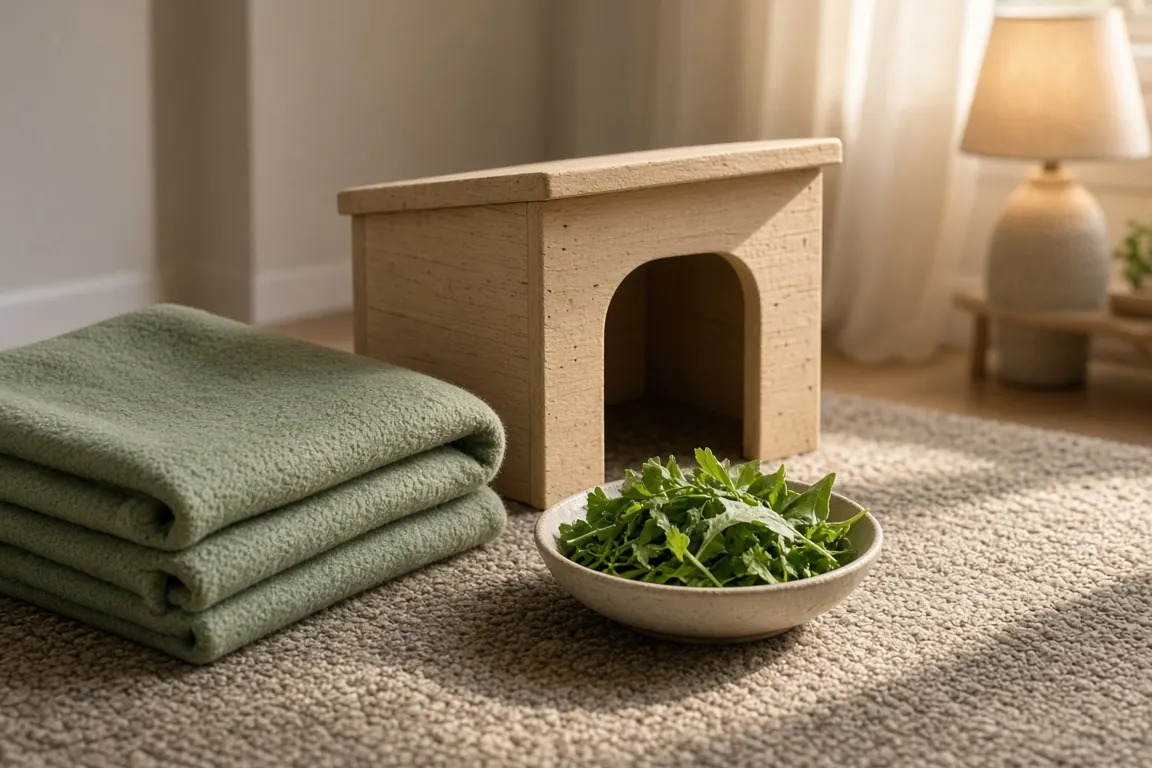
- Their own fleece or hidey house, which carries their scent.
- A few favorite foods: parsley, coriander or dandelion leaves for a rabbit or guinea pig, a lick of their usual treat for a ferret. Many pets will eat right up to the sedation.
- An absorbent pad or old towel under the blanket.
- A small box or basket lined with a soft cloth, ready for afterwards.
- Tissues, water for you, and your phone switched to silent.
Older children can be present if they want to be, with a simple explanation beforehand of what they'll see. Younger ones often do well saying goodbye before the vet arrives. Our article on talking with children about losing a small pet has words that help.
The one left behind
Can the bonded partner stay in the room?
Usually yes, and a home visit makes it easy. The partner can stay in their pen close by during the sedation, then come out once the vet has confirmed death. Rabbits and guinea pigs often sniff, nudge or lie beside their companion for a while before moving away. Ferrets may try to drag their friend to a sleeping spot. Let it happen at their own pace.
Afterwards, watch the survivor's appetite and droppings closely for the next few days, because grief can tip a rabbit into gut stasis. Our bonded-pair survivor care guide and the GI stasis watch guide explain what to check and when to call the vet.
Where would you prefer your pet's final moments to happen?
Tap an answer to vote and see how others answered. Anonymous.
Before they leave
Which keepsakes should you make before the body leaves?
Once your pet goes with the vet or a provider, the chance for physical keepsakes has passed. It takes only a few minutes, and you can do it while the partner is still visiting.
- A fur clipping. Snip a small tuft from under the chin or the back of the neck, where it won't show. Tie it with thread and keep it in an envelope.
- A foot impression. Rabbits have furry feet without pads, so ink prints come out fuzzy. Air-dry clay gives a clearer shape; press gently and let it set.
- Whiskers. Shed whiskers often turn up in the bedding. Keep any you find.
- Photos of the small details. Ears, nose, feet, the pattern on their back. You'll be glad of them later.
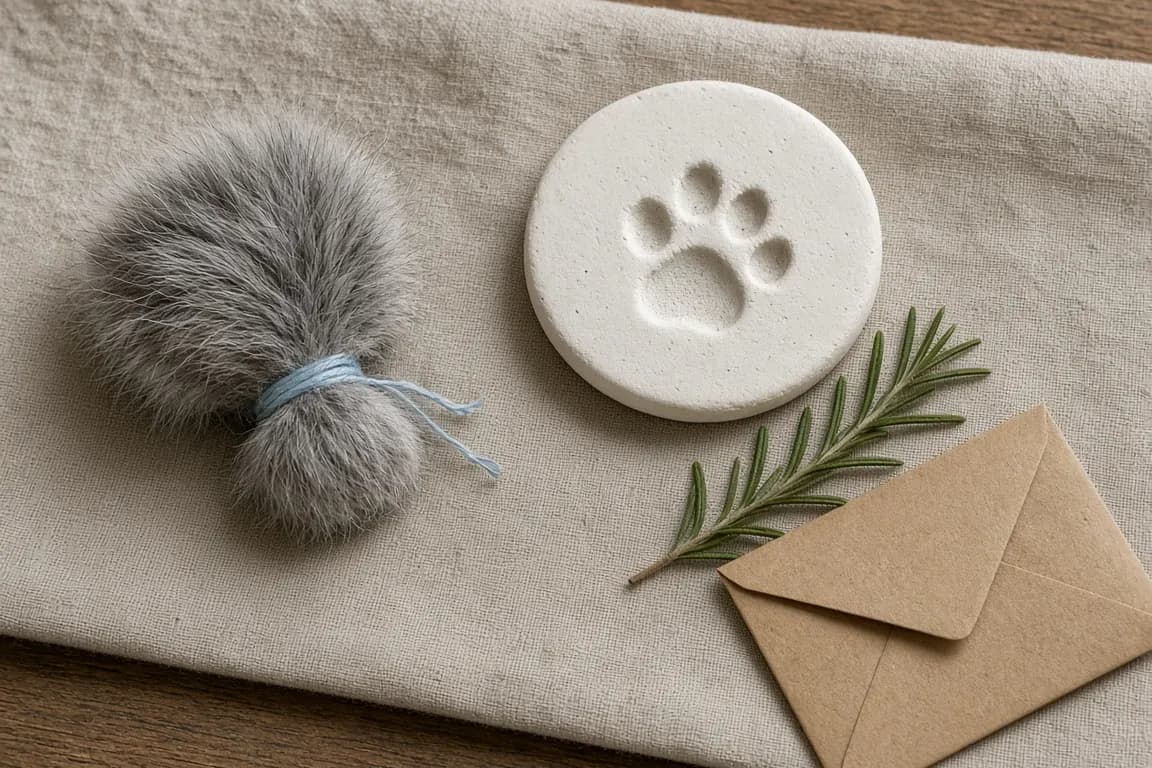
If you'd like to turn these into something more lasting, our pieces on keepsakes and jewelry and memorial ideas have options that suit a tiny companion.
Aftercare
What happens to your pet's body after a home euthanasia?
Decide this before the vet arrives, not after. There are three usual routes. The vet can take your pet with them for cremation through their own provider; ask which one, whether it's private or communal, and get the price in writing. A pet crematorium can collect from your home later that day. Or you keep your pet for burial in your own garden.
If you bury, dig deep enough that nothing can reach them. Euthanasia drugs stay in the body, and since 2003[5] US labels for those drugs have had to warn that animals must be deeply buried or cremated so wildlife can't eat them; Cornell's Waste Management Institute sets out why. A dog digging up a garden grave is at risk too.
Choosing private cremation means your pet's own ashes come home, and the amount is small: a median-weight rabbit leaves roughly 74 g[6] by our estimate. Our guide to private versus communal cremation covers the difference, and the comparison tool below weighs every option against what matters to you.

Free tool
Aftercare options compared
Compare private, communal and water cremation with burial on cost, timing and what comes home.
If you'd like options lined up before the visit, send us a short request and we'll email the cremation and collection choices near you.

Reader polls
What would you choose?
Vote anonymously and see how other readers answered. The results are live counts from people who visit this site, so they show real opinions, not a scientific sample.
What would you most want to keep from your rabbit, guinea pig or ferret?
Tap an answer to vote and see how others answered. Anonymous.
Where would you prefer your pet's final moments to happen?
Tap an answer to vote and see how others answered. Anonymous.
Which memorial feels most like your pet?
Tap an answer to vote and see how others answered. Anonymous.


Questions people ask
Does home euthanasia hurt a rabbit or guinea pig?
The only thing your pet should feel is the sedation injection, which is a quick pinch similar to a vaccination. After that they fall into a deep sleep, and the final injection is given only once the vet has checked there is no response to touch or a toe pinch. Some vets use gas anaesthesia instead, which avoids even the first needle.
How long does an at-home euthanasia visit take?
Most visits last between thirty minutes and an hour. Around ten minutes goes on talking and paperwork, the sedation takes several minutes to work, and the vet won't rush the end. If you want time alone with your pet afterwards, tell the vet in advance so they can wait outside or come back for the body later.
Can I hold my pet during the euthanasia?
Usually yes. Many owners hold their rabbit or guinea pig on a folded towel in their lap for the sedation and stay holding them throughout. The vet may ask to place your pet on the floor or a table briefly to give the final injection, then hand them straight back. Ask how your vet prefers to work when you book.
Is a home goodbye possible for a hedgehog or chinchilla?
Yes, though fewer mobile vets handle them. Hedgehogs roll up when stressed, so vets often use gas sedation to relax them first. Chinchillas overheat easily and hate being restrained, which makes a calm home setting especially helpful. Ring an exotics practice first and ask whether a vet can visit or recommend someone who does.
What if my pet dies before the vet arrives?
It happens, especially with small mammals that decline quickly. Call the vet to let them know. Many will still come to confirm death and take the body for cremation if that was the plan, though you may pay a visit fee. Otherwise lay your pet on a towel in a cool room and contact a cremation provider directly.
Should I feed my rabbit before the vet comes?
Yes. Unlike cats and dogs going under anaesthetic for surgery, rabbits and guinea pigs aren't fasted, and a stomach full of favorite greens is a comfort. Offering food also tells you something: many pets eat eagerly right up to sedation. Keep treats small for ferrets, especially if they have insulinoma, and ask the vet if unsure.
Keep reading


Sources and our estimates
- [1] 37% of US small-animal-owning households have a rabbit, 23% a guinea pig and 18% a hamster. American Pet Products Association (APPA) 2025 National Pet Owners Survey release, 2025.
- [2] Pet rabbits in England have a median age at death of 4.3 years. O'Neill et al. 2020, Veterinary Record - VetCompass rabbits, 2020.
- [3] CareCredit's 2025 study put US cat euthanasia at $158 in clinic and $359 at home, cat cremation at $180 and cat cemetery burial at $566. CareCredit (Synchrony) - Cat Euthanasia: Understanding Your Options and Costs (2025 ASQ360 procedural cost study), 2025.
- [4] Lap of Love, a national in-home euthanasia network, lists a base in-home euthanasia fee of $530 in the Chicagoland area, plus $100-$200 for evening, weekend, holiday or last-minute visits. Lap of Love - How Much Does In-Home Pet Euthanasia Cost?, 2025.
- [5] Since 2003 the FDA has required euthanasia drug labels to warn that euthanized animals must be disposed of by deep burial, incineration or another approved method to keep scavenging wildlife from eating the carcass. Cornell Waste Management Institute & Penn State - Horse Mortality: Carcass Disposal Alternatives (2012), 2003.
- [6] A median-weight adult pet rabbit (2.1 kg) would be expected to return about 74 g (2.6 oz) of cremated remains. Our estimate: 2,100 g x 3.5%. How we calculate.
Get aftercare options ready before the visit
Tell us what you need and where you are. We'll reply by email with clear options and prices so you can decide in your own time.